Old Navy Launches a Sports Brand
An analysis of the sub-brand launch by Old Navy, the No. 5 player in the US activewear market.
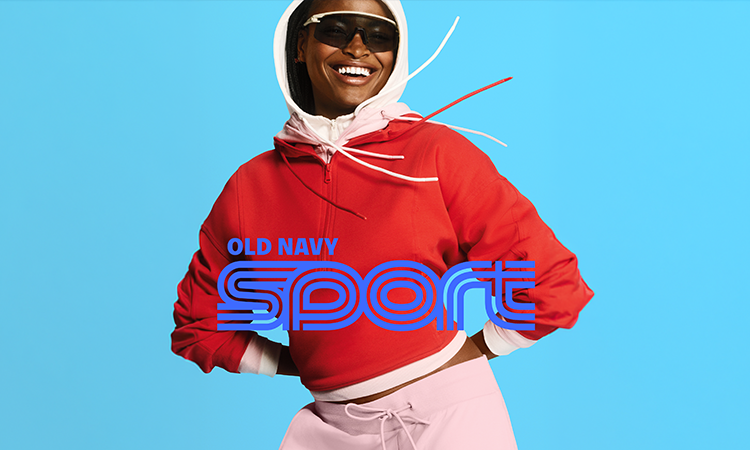
Old Navy, which has been closely trailing the major sports brands in the US activewear market, has made an important change. Moving beyond a category that sat in the "workout corner" of its stores, it has officially launched "Old Navy Sport," an independent sub-brand with its own name and identity.
We look at why a large retailer already posting massive sales volumes chose to launch an independent brand now in the women's activewear market, widely considered saturated, and what it means.

Redefining Fabric and Fit
Old Navy Sport's core positioning lies in "an overwhelming case for value relative to price." It eliminated the clunky details of conventional low-cost activewear and put forward its own fabric names and fits tailored to different types of exercise.
- PowerSoft: A fabric aimed at medium-intensity workouts, featuring the removal of the front seam for significantly improved comfort in the crotch area, deep side pockets that fit a smartphone, and back seam lifting technology that shapes the hip line.
- StudioSmooth: An ultralight fabric optimized for yoga and Pilates, offering a fit that hugs the body without restricting movement.
- Bounce Fleece & Light: A fabric lineup that brings out drape to create an elegant silhouette.
Claiming the Market with Accessible Price Points
The women's activewear market is currently clearly divided by price point and fashion appeal. The premium tier, including Lululemon, Alo Yoga, and Vuori, maintains high price tags and sells a luxurious brand experience. Meanwhile, collaboration brands such as NikeSKIMS are pushing into the mid-to-high range.
Old Navy Sport has clearly targeted the very bottom of this spectrum: the "lowest-priced mass tier."
The key is that it lowered prices without giving up functionality. The brand emphasizes that "the core of the strategy is offering both real workout performance and everyday versatility, while proposing accessible value." The calculation is to densely fill the bottom of the market with a lowest-priced lineup that delivers practical functionality.

Expanding Gap Inc.'s Portfolio
Looking at the overall moves of parent company Gap Inc. reveals how a single company absorbs the entire market through its brand portfolio.
Within the group coexist everything from high-end limited-edition designer collections to structured tailoring, celebrity collaboration denim targeting Gen Z, and Old Navy Sport's practical activewear.
Rather than overextending a single brand's territory, it's a strategy of independently operating sub-brands with different concepts and price points to capture every customer segment in the market. This mirrors how Inditex Group maintains its market dominance by running Zara, Massimo Dutti, and Bershka separately.

Gen Z's Retro Craze and Short Supply
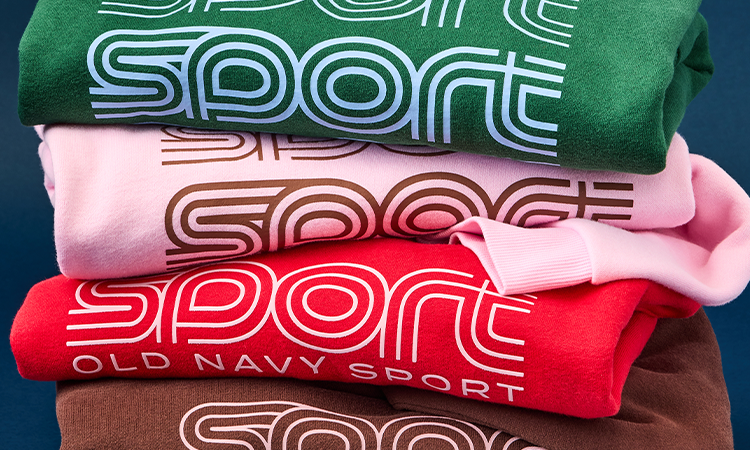
Gen Z consumers' enthusiasm for retro-style activewear has continued recently, but on resale platforms, inventory of vintage products in good condition has gradually run dry and prices have risen.
Old Navy Sport has precisely targeted this gap. To young consumers who find it harder to get clothes with the vibe they want on the resale market, it offers brand-new products with a retro sensibility as a reasonable alternative, directly absorbing resale demand into orders for its own new products.
💡 EDITORIAL SMALL TALK
Old Navy's sub-brand launch clearly shows that the activewear market has entered full maturity, polarized between premium and affordable mass. Going beyond simply lowering prices, it presents "value with a clear rationale" through key detail improvements and media validation, and this move to break through the brand's limits with independent naming is an excellent business benchmark that reminds mid-tier brands of the importance of clear positioning.