4 Brands That Opened Paris Fashion Week
An analysis of the first 48 hours of SS27 Paris Fashion Week, with key viewing points by brand.
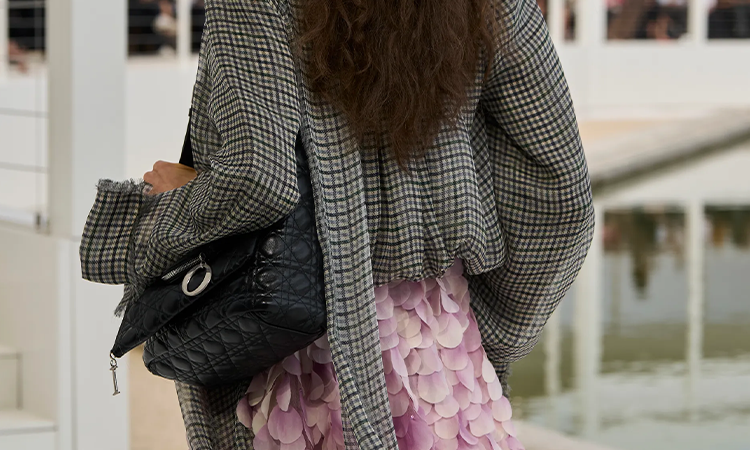
This season, Paris Fashion Week (PFW) has moved past the era of spectacle cheering on the arrival of new names; the real viewing point running through its first 48 hours has shifted to "how brands prove their identity."
From Julie Kegels, who took the opening slot on Monday afternoon just 24 days after winning the LVMH Prize, to Dior under Jonathan Anderson in his second year at the house, Maison Margiela under Glenn Martens, back after parting ways with Diesel, and Ellen Hodakova Larsson, who reinterpreted luxury with ship sails.
We analyze the four key collection themes, design features, and buying insights that opened Paris Fashion Week.
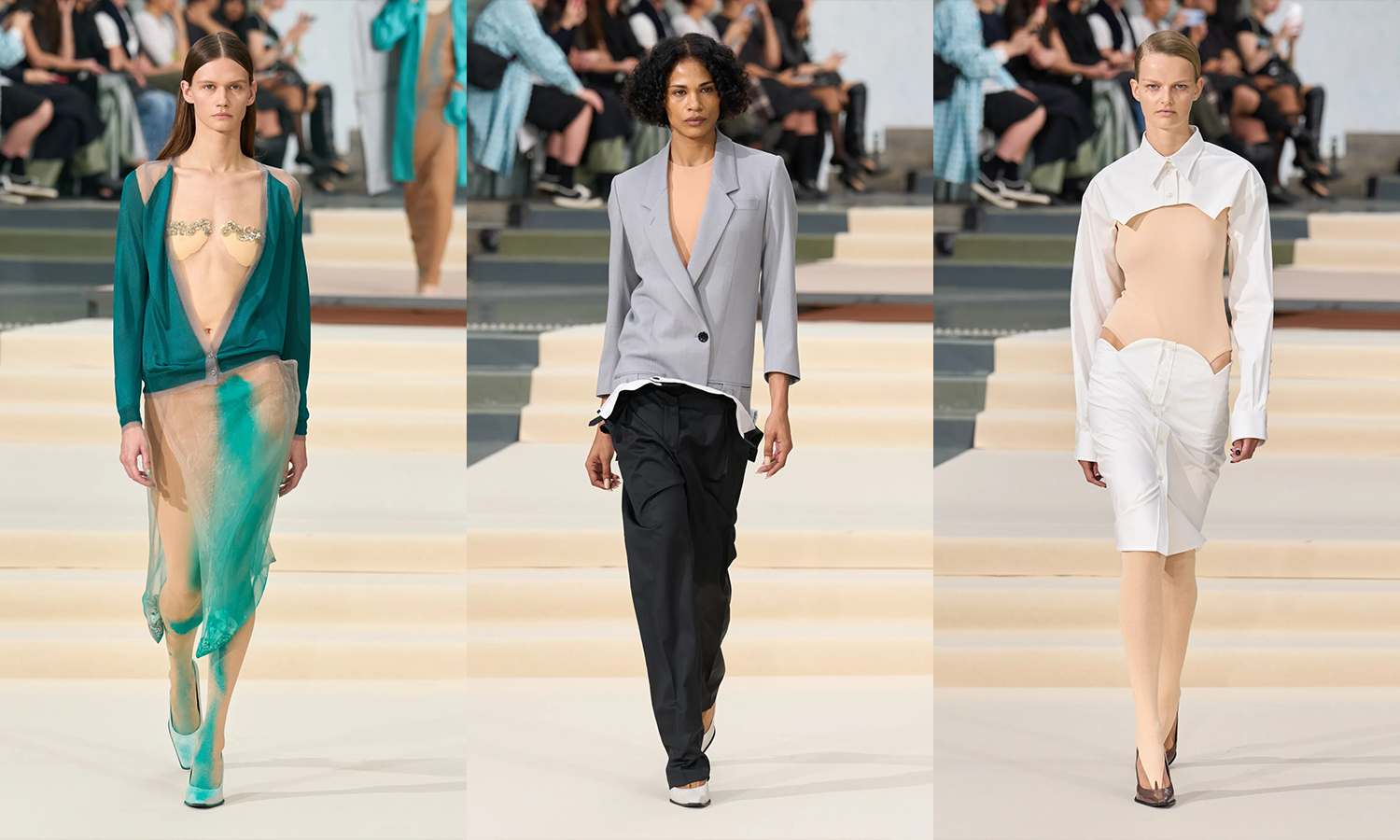
Julie Kegels — Forms and Play That Defy Gravity
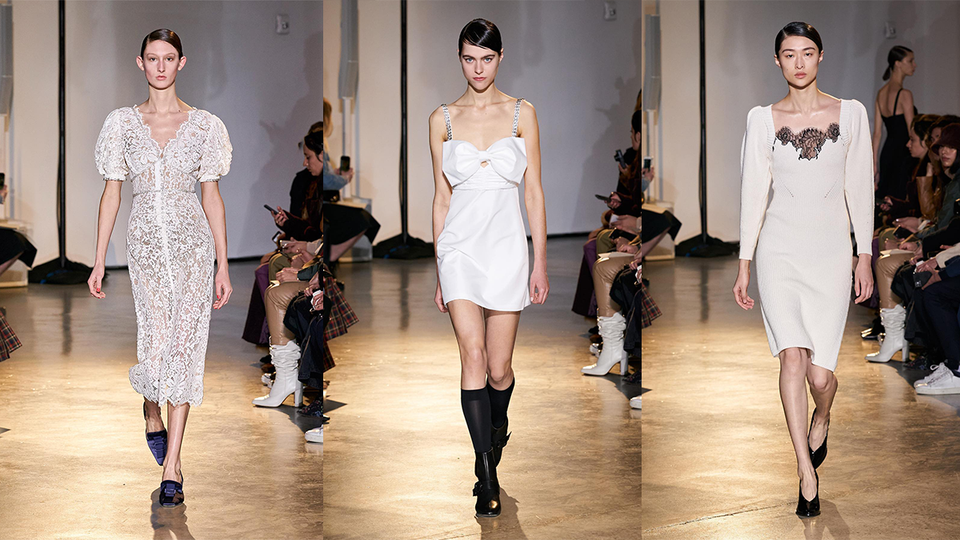
Julie Kegels, a graduate of the Royal Academy of Fine Arts Antwerp who founded her label in 2024, was given the official PFW opening slot for the first time in the brand's history, with her sixth collection overall.
- Collection theme: "Apple of the Day." Taking Newton's apple as a motif, she unpacked the physical and emotional concept of "falling in all its forms" with her signature wit and humor.
- Design features: She reinterpreted the apple, a widely recognized symbol, through diagonal cutouts, unbalanced draping, and asymmetric fitted pieces. Asymmetric hemlines that seemed to slide down or be pulled by gravity, high-neck structures evoking the curves of fruit, and rounded-shoulder silhouettes stood out. Layering witty fruit prints and patchwork details over structural deconstructivism true to the Antwerp lineage, she completed the brand's signature dual aesthetic.
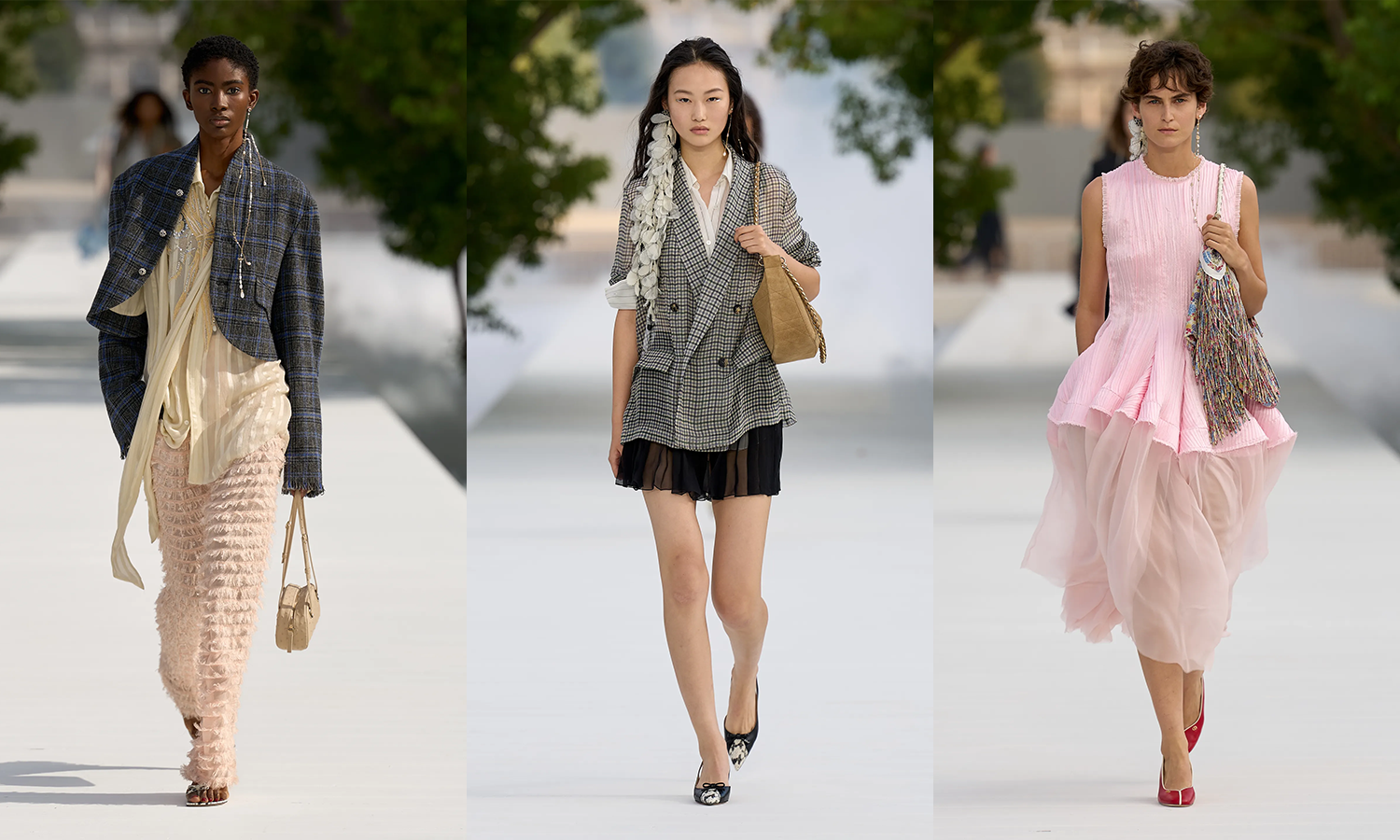
Christian Dior — Archive as a Tool and Practical Deconstruction
The directors of the major houses on this PFW stage have all lost their "debut-season premium." The market's yardstick has now shifted from external buzz to comparison with "themselves last season." Jonathan Anderson, who took Dior's top Tuesday slot, showed a precise reinterpretation of the archive.
- Collection theme: "Archival Utility & Soft Structure." Transforming Dior's grandeur into everyday lifestyle luxury, it explored the layered combination of traditional heritage and modern separates.
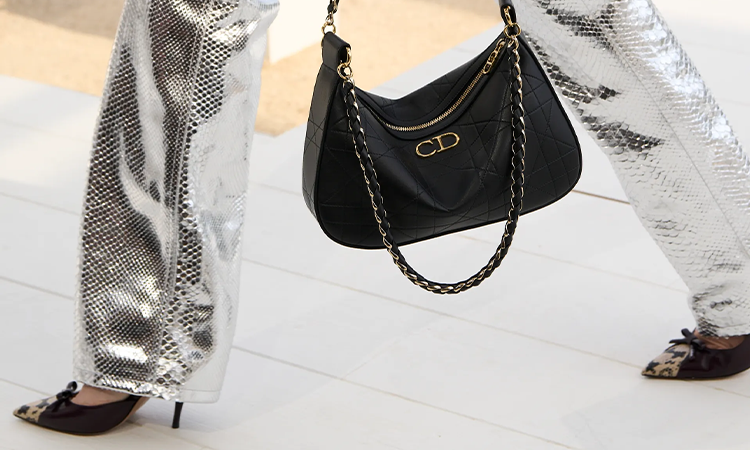
- Design features: The sculptural waistline of the house's iconic "Bar Jacket" was softened into a flexible, soft structure rather than a columnar form. It presented a "modular" design that layered deconstructed bra tops and archive skirt fabrics over cotton poplin shirts and cargo-style trousers. Instead of haute couture volume, it applied delicate intarsia knits, supple leather lapels, and minimal buckle details, maximizing a luxurious practicality that can be worn right away.
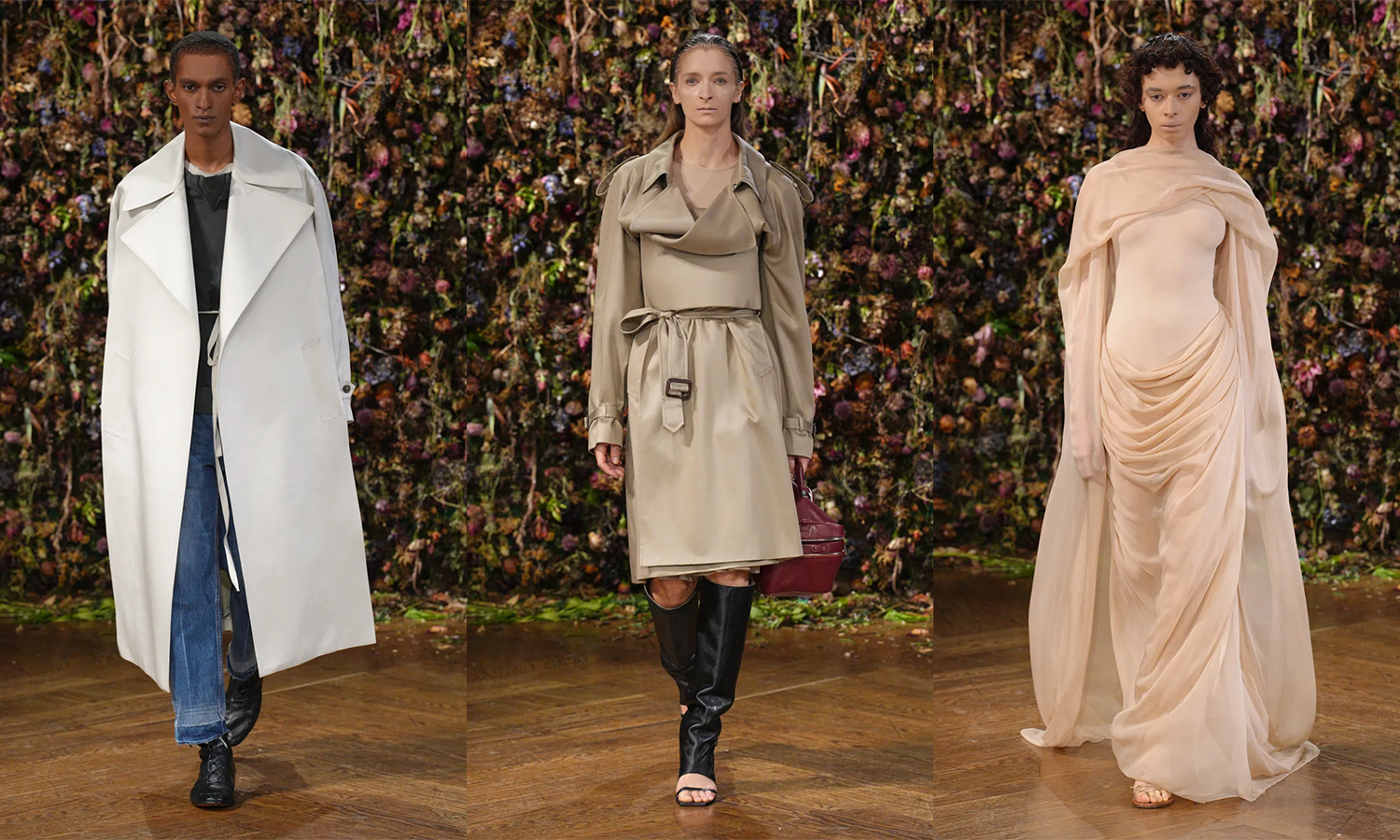
Maison Margiela — Commercial Anonymity
Glenn Martens, who finished his farewell Diesel show in Milan on September 22, staged Margiela's runway in Paris just seven days later. Returning to its home base after last season's trip to Shanghai, this show translated the avant-garde edge of couture into the context of ready-to-wear.
- Collection theme: "Deconstructed Anonymity." It combined founder Martin Margiela's fundamental codes of anonymity, masks, and deconstructivism with the currents of 2000s underground rave and street culture.
- Design features: Plastic draping and jewel-toned silhouettes proven in the couture show were transplanted with volume onto ready-to-wear trench coats and leather jackets. Industrial tailoring with twisted shoulder lines, masks and headwear with sheer fabrics layered irregularly, and distressed patterns made by slashing and restitching materials diagonally formed the core. In particular, the brand significantly strengthened its new shoe category by applying sharp claw shapes and fabric texture variations to its key asset, the Tabi lineup.
HODAKOVA — Clothes Built from Sails
Ellen Hodakova Larsson, the 2024 LVMH Prize winner based in Stockholm, is a designer who has elevated upcycling from a simple campaign to the ranks of "top-tier luxury aesthetics."
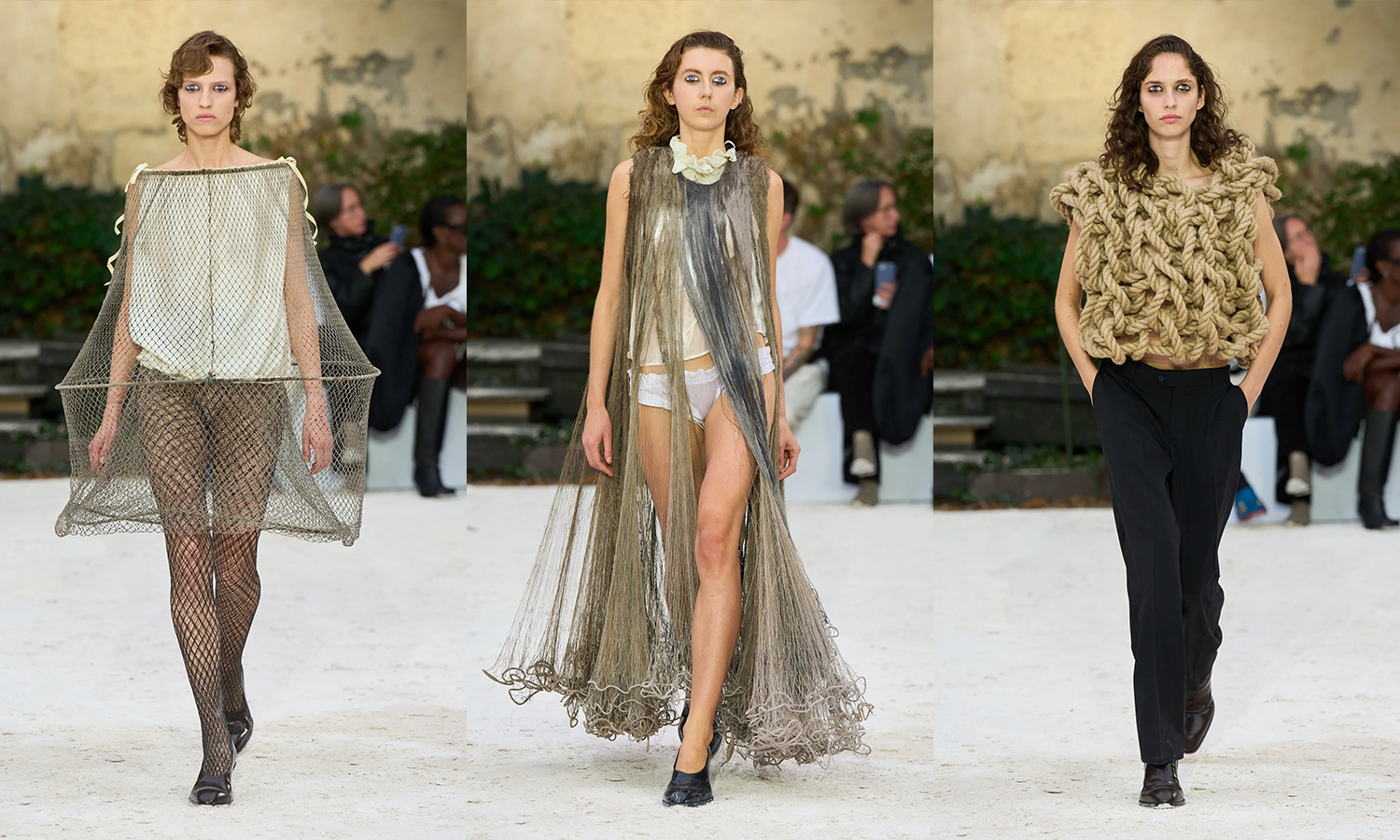
- Collection theme: "Sails & Structures." Adopting massive ship "sails" actually used at sea and water-repellent waxed fabrics as the main archive materials, it explored the boundary between heritage and craft.
- Design features: The runway began with sheer, water-repellent waxed cloth pieces and expanded into looks precisely pattern-cut from real canvas sails still bearing the marks of wind and waves. The sails' eyelets (brass grommets), sturdy rigging ropes, and stitch lines were worked into dress hemlines and bodice embellishments. Further developing her earlier leather belt dress work, she transformed rough sail fabric through the atelier's three-dimensional draping techniques into elegant, sculptural hourglass-silhouette dresses and outerwear.
💡 EDITORIAL SMALL TALK
The viewing point running through the first 48 hours of Paris Fashion Week lies in each brand's chosen "way of proving itself." Kegels persuasively presented her own position through fast-paced wit and formal play (the apple's fall), Anderson through unwavering consistency and modular design (the archive as a tool), Martens through highly immersive spectacle (dark deconstructivism), and Hodakova through the narrative inherent in her materials (rebuilding sails). Beyond one-off buzz, looking from multiple angles at "reproducibility" on the shop floor and "sustainable sales potential" can be a useful yardstick for reviewing PFW orders and lineup curation this season.