Zara and Galliano Rewrite the Collaboration Formula
A retail expansion combining couture craftsmanship with mass distribution.
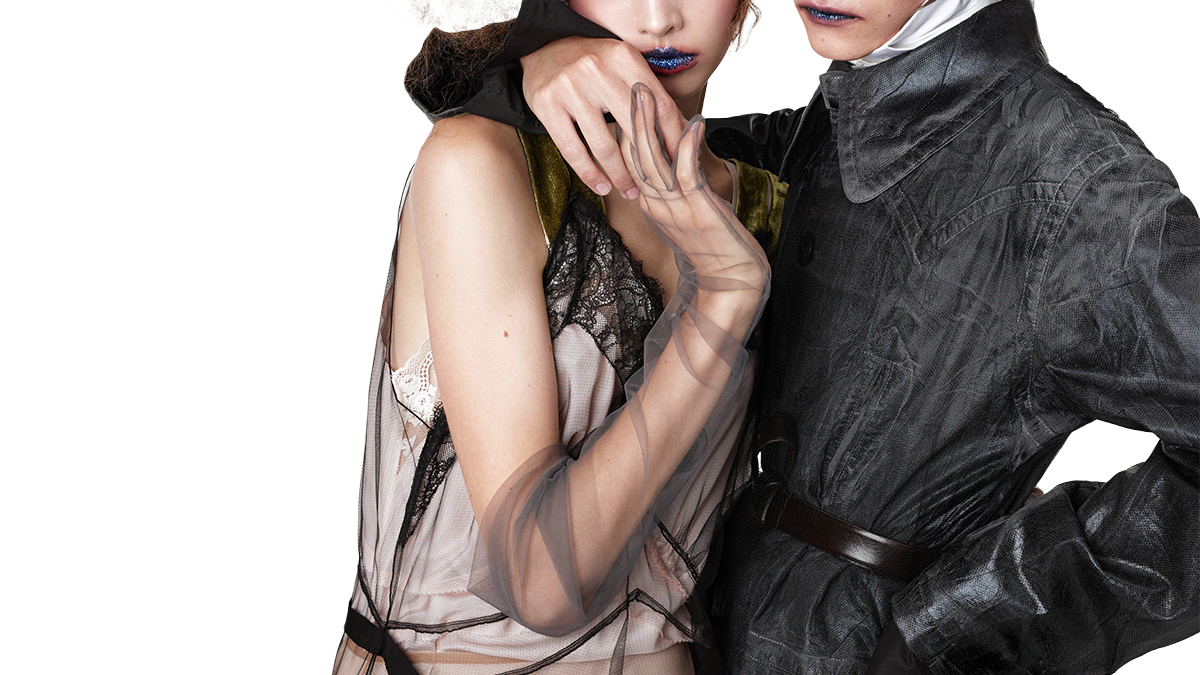
At 5 p.m. KST on October 1, 2026, Vol. 1, the first chapter of Re{form}, the collaboration project between Zara and John Galliano, will be unveiled.
There's a reason this project is hard to see as just another designer collaboration. Re{form} isn't a one-off capsule collection, but a seasonal project that will continue in Vol. installments for at least two years. Instead of generating a single burst of buzz, Zara has chosen a new collaboration approach that continuously builds on a designer's name and perspective.
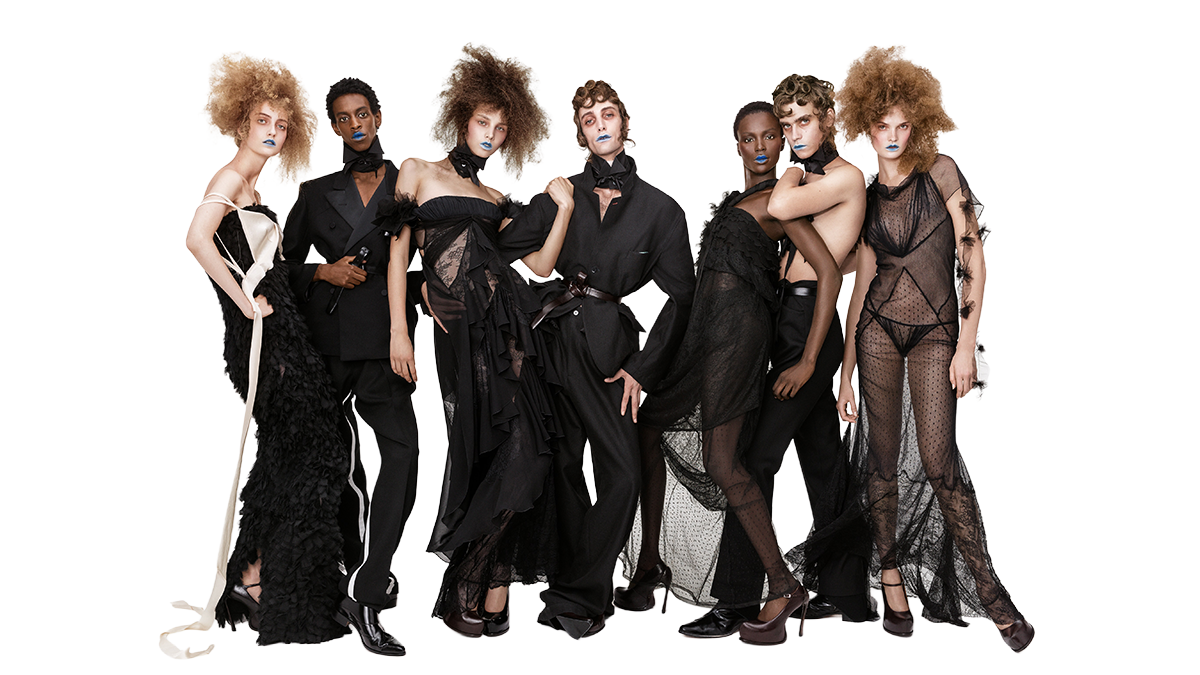
The way it's being unveiled also differs from Zara's previous collaborations. From October 1 to 6, the collection will be presented as an exhibition at a Hôtel Particulier (70 Rue des Archives) in Paris's Marais district, with viewings by reservation only.
This time, Zara, a brand built on mass distribution, has borrowed the methods used by fashion houses and exhibition spaces. Rather than raising prices, it changed the experience surrounding the collection and the way it's revealed.
We look at three ways Re{form} differs from conventional designer collaborations.
1. Zara Chooses "Vol." Over a One-Off Collaboration
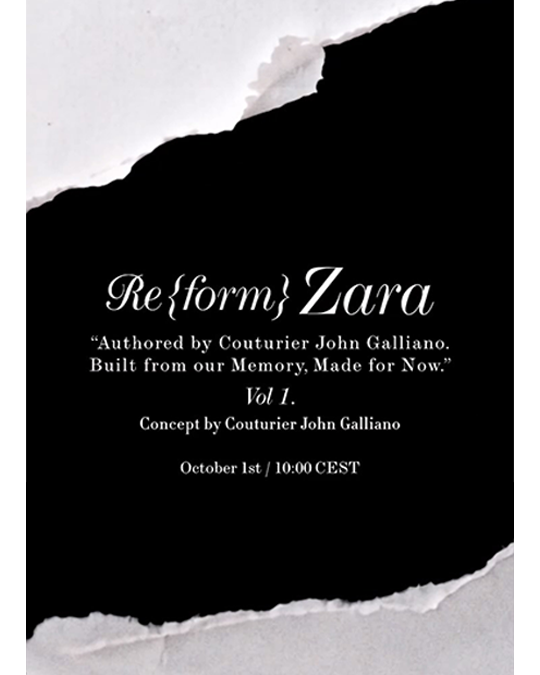
Zara has named this project Vol. 1. It's not a collaboration that ends with a single collection, but a serialized structure that continues into the next season.
The credits read: "Authored by Couturier John Galliano. Built from our Memory, Made for Now." This signals that Galliano appears not simply as a collaborating designer who designed products, but as the author leading the project's direction.
This approach also changes the grammar of designer collaborations. If conventional collaborations generated buzz and sales at a specific moment, Re{form} uses the Vol. format to carry anticipation forward to the next collection.
That's why it can be seen as an attempt by Zara to expand a designer's name from a one-season marketing tool into an ongoing product category.
2. Why a Parisian Mansion Instead of a Pop-Up
Re{form}'s direction also shows in where and how the collection is revealed.
Instead of a typical pop-up store, Zara chose a historic hôtel particulier in Paris. By presenting the collection by reservation during fashion week, it created a structure in which people experience the collection before buying it.
What's especially notable is the gap between price and experience. The collection is sold at accessible price points, but the way it's revealed is closer to a traditional fashion house's private presentation.
This is a way for a mass brand to raise the value of the brand experience without raising the price of the products themselves.
What Zara has borrowed from high fashion in this project is closer to the way a collection is revealed and experienced by consumers than to high fashion's prices.
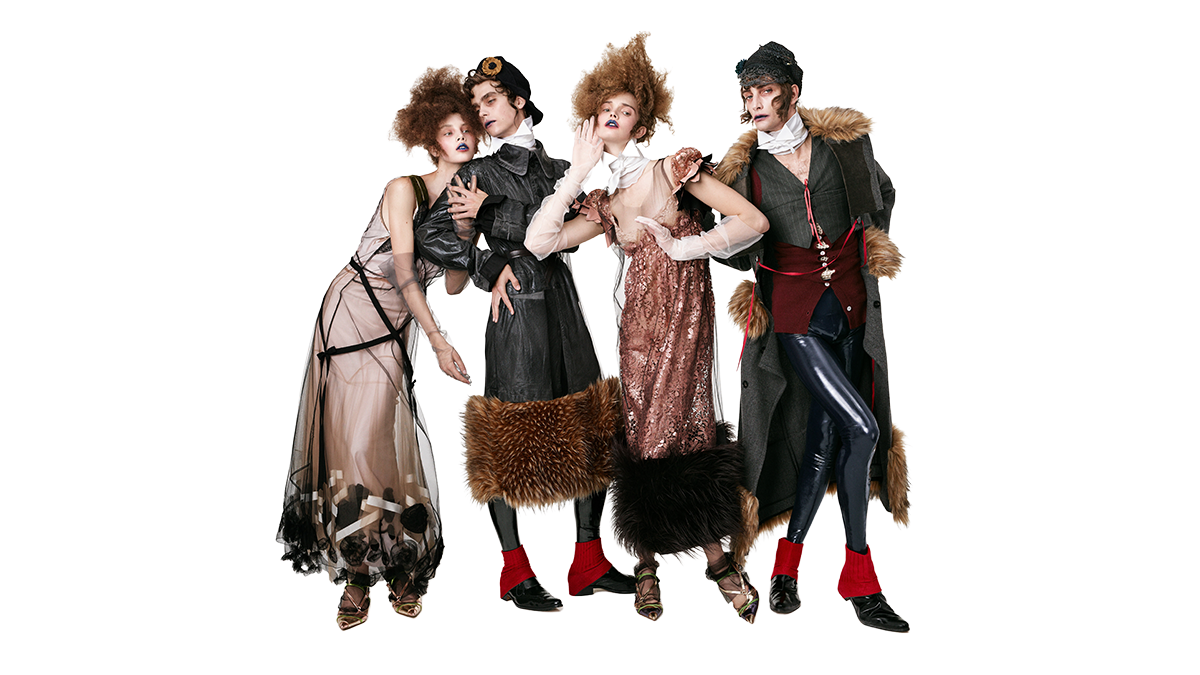
3. Remaking Zara's Clothes the Galliano Way
Another feature of Re{form} is that Galliano used Zara's existing products as the starting point for his work.
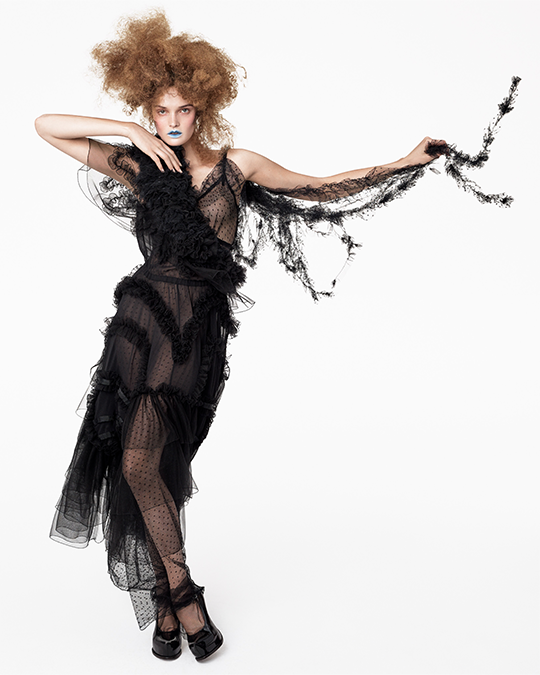
Taking familiar ready-to-wear pieces found at Zara, such as long wool-blend coats, slip dresses, and cotton shirts, he created new forms by deconstructing, cutting, inverting, and reassembling them.
Galliano also describes himself in this work as closer to a "Re-creator" than a creator. Rather than making entirely new clothes, it's about looking again at the structure of clothes that already exist.
What's interesting here is the meeting of Zara's production system and Galliano's way of working.
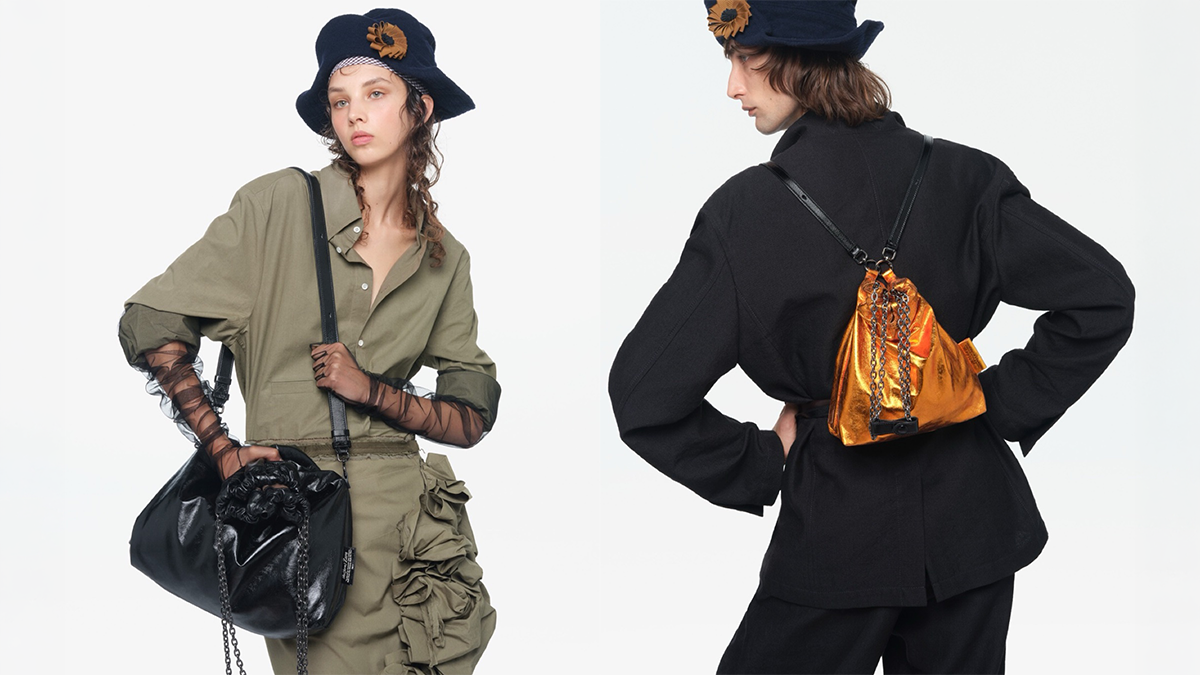
By applying the couture approach of deconstruction and reconstruction not to new materials or rare archives but to everyday ready-to-wear, he turned Zara's existing products themselves into a new design resource.
In the end, Re{form} is less a project bringing Galliano's archive to Zara and more a project of looking at Zara's clothes through Galliano's approach.
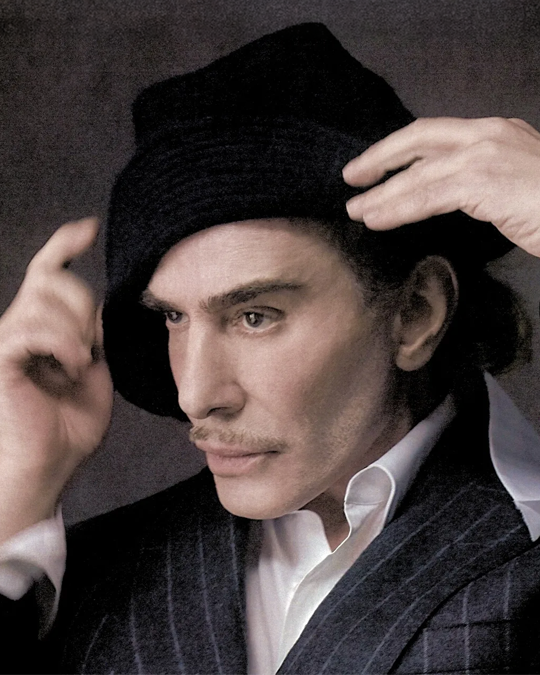
📌A Commercial Return After the Withdrawn Met Exhibition
Another context surrounding this project is Galliano's return to the institutional mainstream.
On August 31, the Metropolitan Museum of Art's Costume Institute withdrew its plans for an exhibition covering Galliano's archive. Backlash from the Jewish community and patrons over his past remarks was cited as the background.
Just a month later, Galliano unveiled a new project with Zara.
Although a museum archive exhibition and a commercial brand's collection are different in nature, the fact that Zara's project arrived at a moment when Galliano's creative work is being reintroduced to the public makes it an important backdrop to this collaboration.
💡 EDITORIAL SMALL TALK
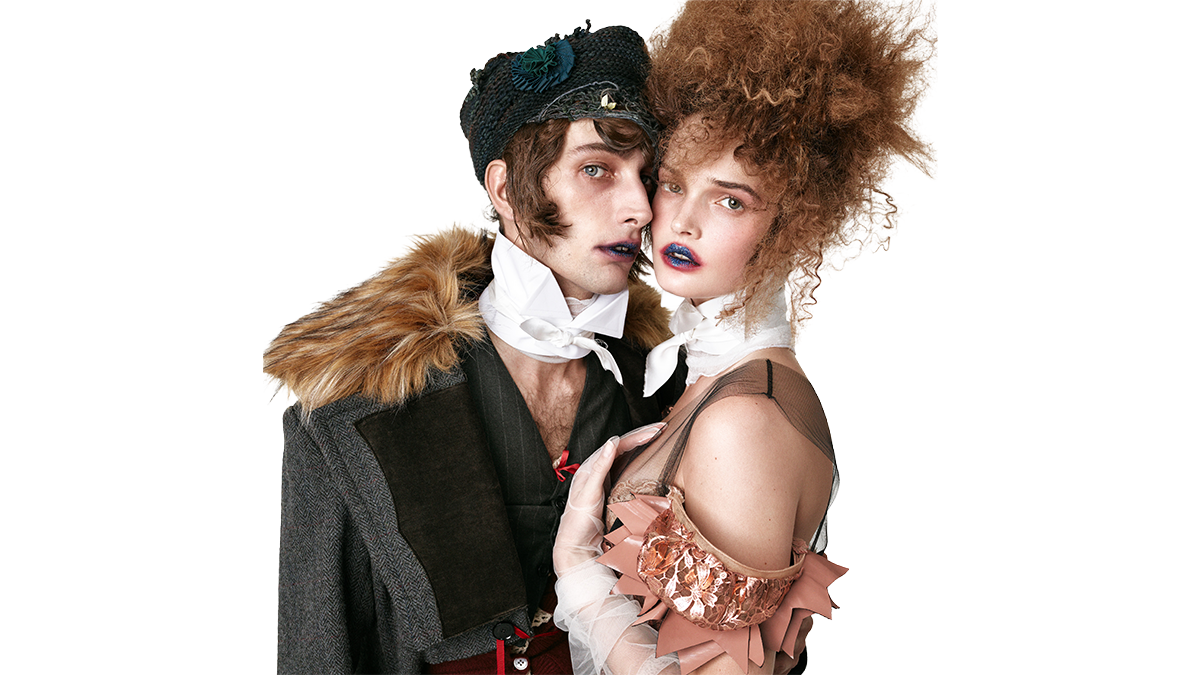
What's notable about Re{form} is less the Galliano name itself than the way Zara uses that name.
From continuing the project in Vol. installments rather than ending it with a single collaboration, to separating mass distribution from a reservation-only exhibition, to reinterpreting existing products into a new collection.
This is an approach that aims to expand designer collaborations from buzz-driven marketing into an ongoing product and brand experience.
In particular, the structure of reinterpreting past seasons' products and archives in a new way can be applied to other brands as well. It's a way of re-commercializing unsold inventory or signature items from past seasons by adding a new design language, rather than simply clearing them out.
What Re{form} shows isn't just the meeting of Galliano and Zara. It's a new retail experiment that adds couture's craftsmanship and presentation methods to Zara's system of accessible prices and mass production.