The Return of 'Amekaji'
A fashion scene circling back to clothing's 'essence' — the 'Amekaji' worldview, led by authenticity and durability.
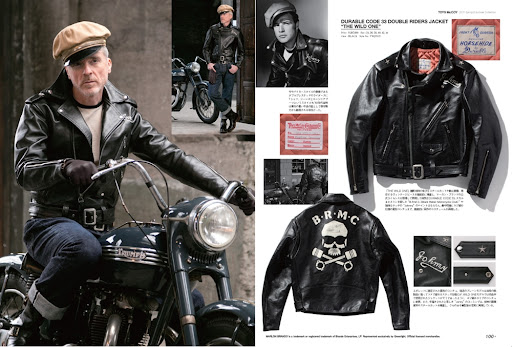
In 2026, the global market is going back to 'the essence.'
At the end of the fatigue from TikTok-driven micro trends, Y2K, and extreme minimalism, the answer consumers have returned to is Japanese-style American casual — so-called 'Amekaji.'

As one fashion industry assessment put it — "offering a true answer to consumers tired of clothes that fray after three washes" — Amekaji isn't simple nostalgia. It's retaking the market through the most powerful consumer logic of all: 'authenticity' and 'durability.' With the Korean and Japanese fashion scenes now synchronizing in real time, we analyzed what practical signals Amekaji's revival sends to Korean select shop buyers.

'The Japanese Logic' of Wearing American Clothes
Amekaji was born in the 1970s and '80s, when young Japanese reinterpreted America's practical clothing — Levi's, Carhartt, Champion — through 'Japan's own precision.'
Three things separate Amekaji from original American casual.

- An Obsession with Precise Detail
A Champion sweatshirt — merely "comfortable clothing" in America — is consumed in Japan as a rigorously calculated item: the weight, the width of the rib, the degree of the wash. - The Aesthetics of Layering
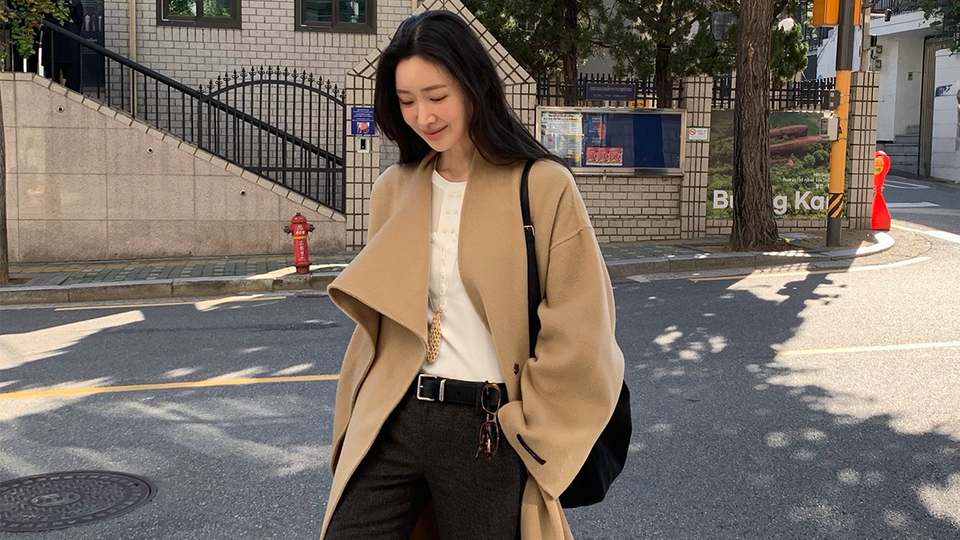
Priority falls not on any single item's appeal, but on the structural balance created when 'coat × sweat × shirt × denim' stack together. - Value That Endures Time
Amekaji's philosophy — "buy what's made to last a lifetime" — meets today's consumer demands for sustainability and conscious consumption perfectly.

The Evolution of the Japanese Select Shop
The recent moves of BEAMS and United Arrows — the first-generation select shops that led Amekaji culture — show where Japanese fashion retail stands in 2026.
- In February 2026, the two brands' emblematic figures, Hirofumi Kurino and Hiroshi Kubo, took a forum stage together to discuss the essence of fashion across eras — a symbolic scene of the first generation's Amekaji grammar being handed to the next.
- United Arrows, notably, will transition this October to a holding company structure under 'TABAYA Holdings' — foreshadowing its evolution beyond a buying select shop into a massive distribution enterprise operating a portfolio of brands.

The Synchronization of K-Fashion and the Japanese Scene
According to Yahoo Japan's 'Next Trend Predictions 2026' data, Japanese consumers actively embrace foreign culture — Korean, Chinese — but open their wallets only for what has been thoroughly 'localized the Japanese way.' This is the root logic from which Amekaji (American culture digested Japanese-style) was born.
At the same time, a fascinating reversal is underway. Where Korea once one-directionally imported the Japanese select shop's language, in 2026 the avant-garde silhouettes of Seoul designers and K-lifestyle are becoming the Japanese market's "next hit keywords." A two-way structure is now complete: the two markets referencing each other, actively generating global trends together.

The Wholesale Angle: Buy the Worldview
Looking at global wholesale transaction data identified by THE BULLET, the elements of BEAMS' Amekaji curation — New Balance, Polo Ralph Lauren, Carhartt WIP, PORTER, nanamica — are alive and well on Korean select shops' order lists this year.
That consumers in both countries want the same brands means the 'consumer psychology' moving them is the same.
- The core of seasonal buying isn't hunting a single brand's hit item.
- "When this work jacket, this duffle coat, and this backpack come together — what story do they tell?" Buyers should curate not individual brands, but how to weave the vast 'worldview' of Amekaji through the store itself.

Storytelling Points
The Amekaji Lineage
Japan's Amekaji began with 'VAN JAC,' founded in 1954 by Kensuke Ishizu, which introduced Ivy League style to Japan. After the company's bankruptcy, its spirit passed on to BEAMS (1976) and United Arrows (1989) — a heritage carried unbroken all the way to 2026.
NIGO and Human Made
Created by NIGO — founder of BAPE and devoted Amekaji enthusiast — 'Human Made' is the definitive brand borrowing 1950s Americana moods and the heart motif.