2026: The Year of the Micro-Brand
The era of the "micro brand," armed with extreme focus and community, has arrived.
One of the most important keywords defining the 2026 fashion retail scene is the "micro brand."
"Micro" here doesn't simply mean "a small brand with modest revenue." It refers to labels with an "extreme level of focus" that even fast-fashion giants can't easily imitate.
In 2026, consumer shopping fatigue has reached a tipping point. Shoppers are no longer looking for "well-made clothes" but for "clothes you can't find anywhere else." Here, we break down the structural reasons these small brands are taking over the global luxury market and high-end multi-brand stores without big capital behind them.

Why Micro Brands Are Winning Now
The standard for "brand equity," once the exclusive domain of big capital, has been completely turned upside down. If brand equity used to mean "how many people know us," in 2026 it means "how irreplaceable we are." There are four game changers that shifted the landscape.

The Collapse of Manufacturing Barriers
Factories that once needed runs of 1,000 units just to keep running can now handle orders of 10 units through "on-demand distributed manufacturing." Producing a specific colorway in small batches or insisting on fabric with exclusive specs is now systemically possible.
AI Has Flipped "Discovery Bias"
When a consumer asks an AI shopping assistant for a "crisp Italian cotton shirt," the AI surfaces the brand whose fit and fabric best match the consumer's intent, rather than the big brand burning through massive ad budgets. Discovery is driven not by capital but by "precision."
Zero Ad Spend: The Community Is the Product
Instead of handing out sponsorship fees to influencers, these brands rally "superfans" who share their taste. With no marketing budget, they dig deep into a single community, and that turns into impenetrable loyalty.
Ultimately, big brands are paradoxically held back by their own "massive size." While they hesitate to test experimental materials or small-batch production for fear of hurting profitability, micro brands move in and take over that gap.

Not Size, but "Focus"
So what actually separates an ordinary "small brand" from a "micro brand"? The key lies in "knowing what to give up."
Defensible Identity
While a typical small brand shifts direction with every market trend and ends up with a blurry identity, a micro brand focuses intensely on a single item and mood, building an impenetrable line of defense.
Production Exclusivity
Rather than relying on shared wholesale catalogs and chasing mass production at all costs, they insist on their own proprietary material specs and firmly hold to limited, small-batch production.
Closed Distribution
Instead of opening every distribution channel whenever the opportunity arises, they open their doors only to their own DTC store and a handful of rigorously selected wholesale partners.
Direction of Growth
They don't burn huge sums chasing size and mass awareness at any cost. Instead, they tightly bind their core community and grow naturally on the strength of that fandom's support.
Whenever micro brands tried to act like macro brands, overextending into new categories or chasing big consultancies, they failed without exception. The "adversity" of not having enough money turned out to be a blessing, forcing them to perfect just one thing.

5 Micro Playbooks
The five brands drawing attention in today's retail scene each prove "the power of small" in their own way.
Aflalo
"The quiet return of the founder who built a $500M giant"
Yael Aflalo, founder of Reformation, which grew into a $500M business, quietly launched this brand after a four-year hiatus, funded entirely with her own capital. With no investors, she presents only top-tier silk dresses and knits by appointment from a third-floor studio in an unmarked building in SoHo, New York. The fact that a serial founder's final conclusion was "smaller, more intentional" says a lot.

Jude
"Replicating a global fandom with a single shoe"
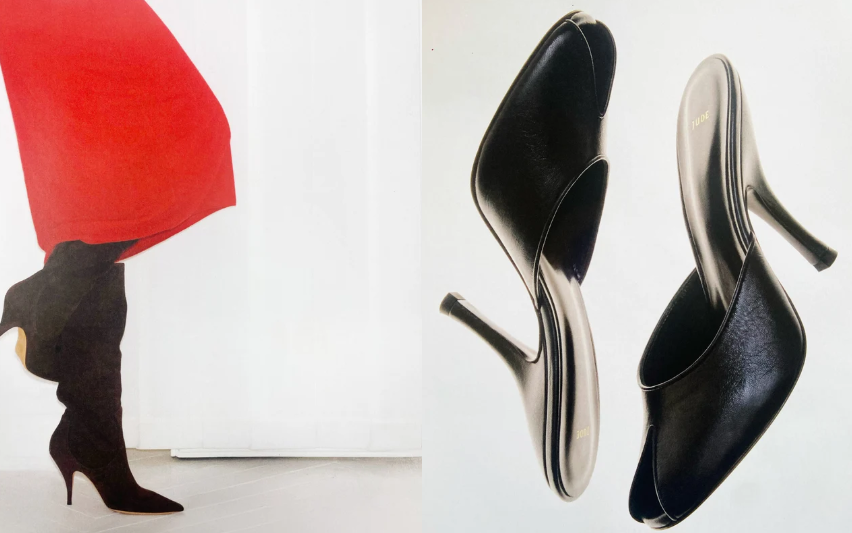
A shoe brand newly launched by the co-founder of By Far, which generated €30M in revenue from bags and shoes. Kendall Jenner and Nicole Kidman were already wearing it before launch, and within just one year it broke into 33 top-tier retailers, including Bergdorf Goodman and Mytheresa. A sharp, social media–driven editorial sensibility outweighed any amount of capital.

La Veste
"The antidote to quiet luxury fatigue"
Its name means "blazer," yet what actually made the brand famous were its bold, vintage-feeling striped pants. It drew in consumers worn out by minimalism with the cheerful colors of Spanish handmade craftsmanship. At its New York pop-up, "superfans" showed up wearing the brand and swept the shelves clean.

The Anteros
"A textbook in thoughtful expansion"
A brand whose designer is barely known even by name, it built word of mouth among fashion editors with a single product: "a shirt made from the crispest Italian cotton." Its only expansion was one item, "Bermuda shorts" made from the exact same fabric as the shirt. Rather than adding categories, it chose to dig deeper into the language of its fabric.

Almada Label
"How two bloggers made it into Harrods"
Founded by two Nordic fashion influencers during their pregnancies. Ignoring manufacturers who warned that "white knits don't sell," they made the clothes they wanted to wear, and now those very knits have waiting lists. Holding firm to a "no markdown" policy, they landed in Le Bon Marché and Harrods within four years.

The Multi-Brand Store Is Itself a Micro Brand
The most thrilling paradox in this massive shift is that offline multi-brand stores and micro brands operate on exactly the same logic.
A brand's strategy of insisting on proprietary materials and specs mirrors the "curation" of a multi-brand store that leaves out the common brands everyone else carries and builds an exclusive buy. Just as micro brands grow organically by rallying superfans, local multi-brand stores survive through their regulars and hyper-local communities.
If there's a difference, it's that micro brands "make" the product while multi-brand stores "choose" it. Stepping in where large department stores have fallen, being the first to discover these small, sharp brands and turning them into champions. That act itself will be the most powerful and coolest "brand equity" a multi-brand store can have in 2026.
💡EDITORIAL SMALL TALK
A Brand Is a Relationship, Not a Plan
The name of the Spanish brand La Veste means "blazer" in French. The founders launched the brand with a plan to make the perfect blazer. But the hit that sent superfans around the world into a frenzy wasn't the jacket they pushed as their signature item. It was the "striped sailor pants." Regardless of the founders' original intent, consumers decided the brand's signature for themselves. It's the most perfect example of how a cool brand in 2026 isn't planned unilaterally but comes together through a "playful relationship" between brand and consumer.