The Taste-Mix Era: Buy Only What Hooks You
Why you should tear down category walls and curate your store's universe.
"It's a downturn — consumers are closing their wallets."
It's the line fashion retailers repeat most these days, but the market's real data sends an entirely different signal. In 2026, consumers haven't closed their wallets. They're simply choosing more cleverly, and more sharply.
At the center of Euromonitor's key 2026 trends sit two opposing psychologies coexisting: 'intentional consumption' — spending with purpose in an uncertain era — and 'fluid identity,' which rejects fixed categories.
To open the wallets of consumers scattered far beyond the single orbit of trend, here's an analysis of the structural shifts in the fashion terrain that retailers and buyers should watch.
"Not Buying Less — Choosing Better"
According to WGSN's SXSW presentation, we now live in the age of the 'polycrisis' — simultaneous, compounding crises. Within it, global psychology doesn't default to simple 'frugality mode.'
Cautious vs. Intentional
The cautious consumer avoids risk by stopping spending altogether; the 'intentional consumer,' the more anxious they become, concentrates harder on "what I truly want — what gives me emotional comfort and consistent value."
Indeed, in Euromonitor's survey, 58% of consumers said they experience significant daily stress and expect brands to provide emotional reassurance — while fully half (50%) said they want products that boldly reveal their authentic selves. Two paradoxical feelings — daring self-expression and psychological comfort — churning inside the same consumer.

Different Hours of the Same Person
The most intuitive way to grasp this shift is to trace an ordinary 'daily route' of a fashion-engaged consumer in 2026.
[07:00 AM]
Early in the morning, they lace up ASICS running shoes and run with the neighborhood run crew — acquiring wellness and the emotional security of belonging to a community.
[12:30 PM]
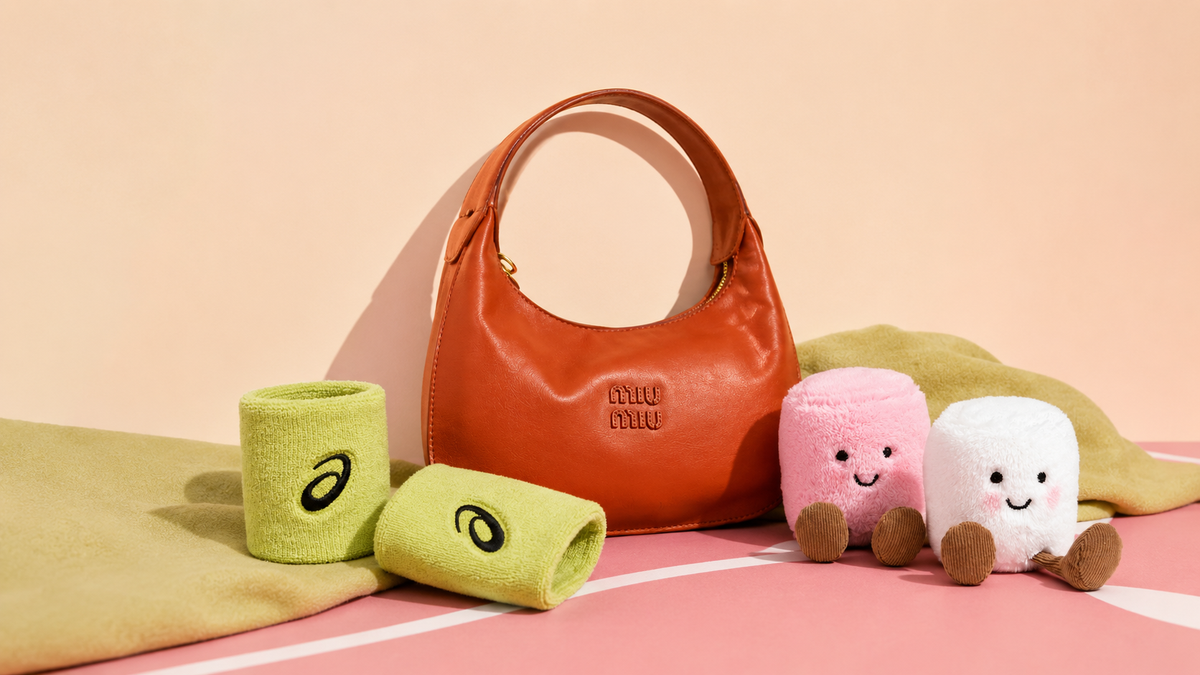
They carry a logo-free Miu Miu mini bag to a lunch meeting — quietly proving their sharp fashion taste through the brand's distinctive aesthetics.
[07:00 PM]
On the way home, they stop by a Jellycat store to pick a cute keyring for a friend's birthday — consuming emotional comfort through an adorable, harmless being.
Is this consumer
an outdoor consumer,
a luxury consumer,
or a kidult consumer?
The answer: 'all of them, and none of them.'
Consumer identity is no longer fixed — it evolves fluidly by context. The old targeting formulas — "luxury consumer, female, twenties," "outdoor enthusiast, thirties" — have completely run out their useful life.
Buy the 'universe'
If consumer identity is this fluid, the buyer's buying formula must change from its foundations.
The Danger of the Single-Identity Store
Single-category planning — "our shop only carries authentic outdoor" or "we only handle high-end luxury" — becomes a prison confining the modern consumer's fluid identity. Consumers who refuse to be defined by one category turn their backs on boring stores first.
The Strange Mix on the Shelf
The select shop must now become 'a space that curates worldviews,' not a merchandise buyer. ASICS runners beside a Miu Miu bag, Paraboot derbies beside a cute Jellycat keyring — this is no longer a 'strange combination.' If anything, it gives consumers a powerful sense of belonging and trust: "this shop completely understands the many facets of my taste."
The ability to twist curation flexibly to the consumer's shifting context, unconfined by a brand's fixed positioning — that is the new weapon of buyers who create sellouts even amid the polycrisis of 2026.