Calvin Klein's American Minimalism
The authenticity of minimalism and the category-focused strategy unveiled by Veronica Leoni.
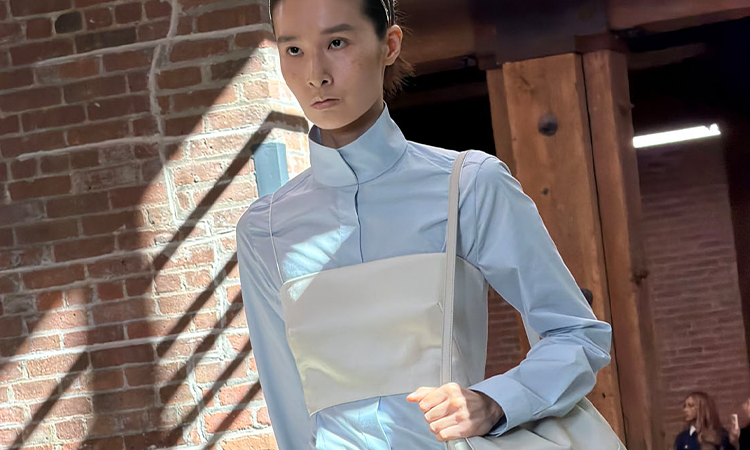
September 11, 2026, Terminal Warehouse in Chelsea, New York. On the floor of a runway that wound through a wide-open industrial space and multiple rooms, three original sculptures by Walter De Maria, a master of American minimalist art, were carefully placed.
Calvin Klein Collection SS27, led by Veronica Leoni, began on top of a clear declaration.
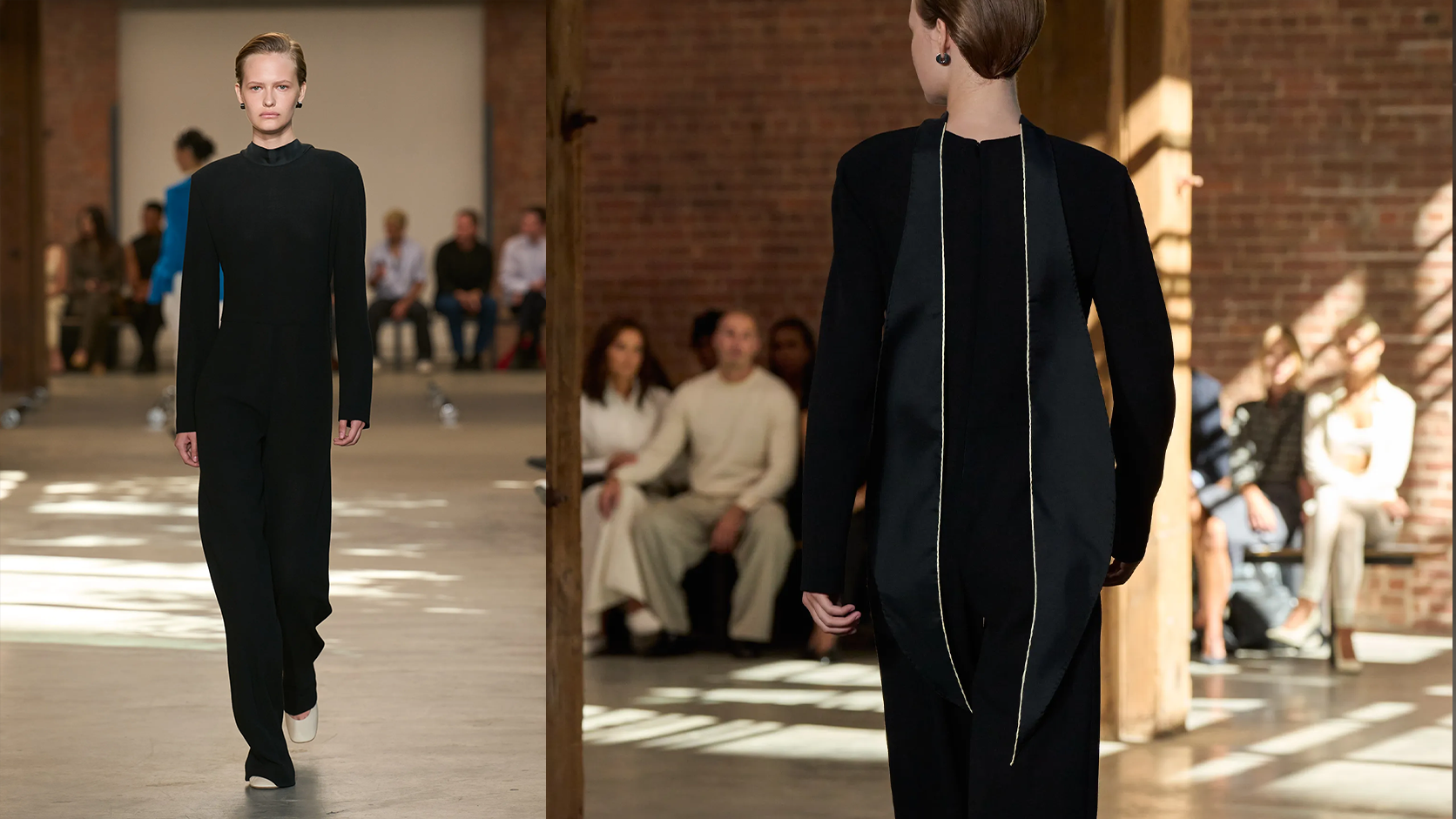
Opening with a black column dress with fluid draping flowing down the back, the show was a stage that reinterpreted, in a contemporary grammar, the aesthetic of Carolyn Bessette, the house's icon of the '90s.
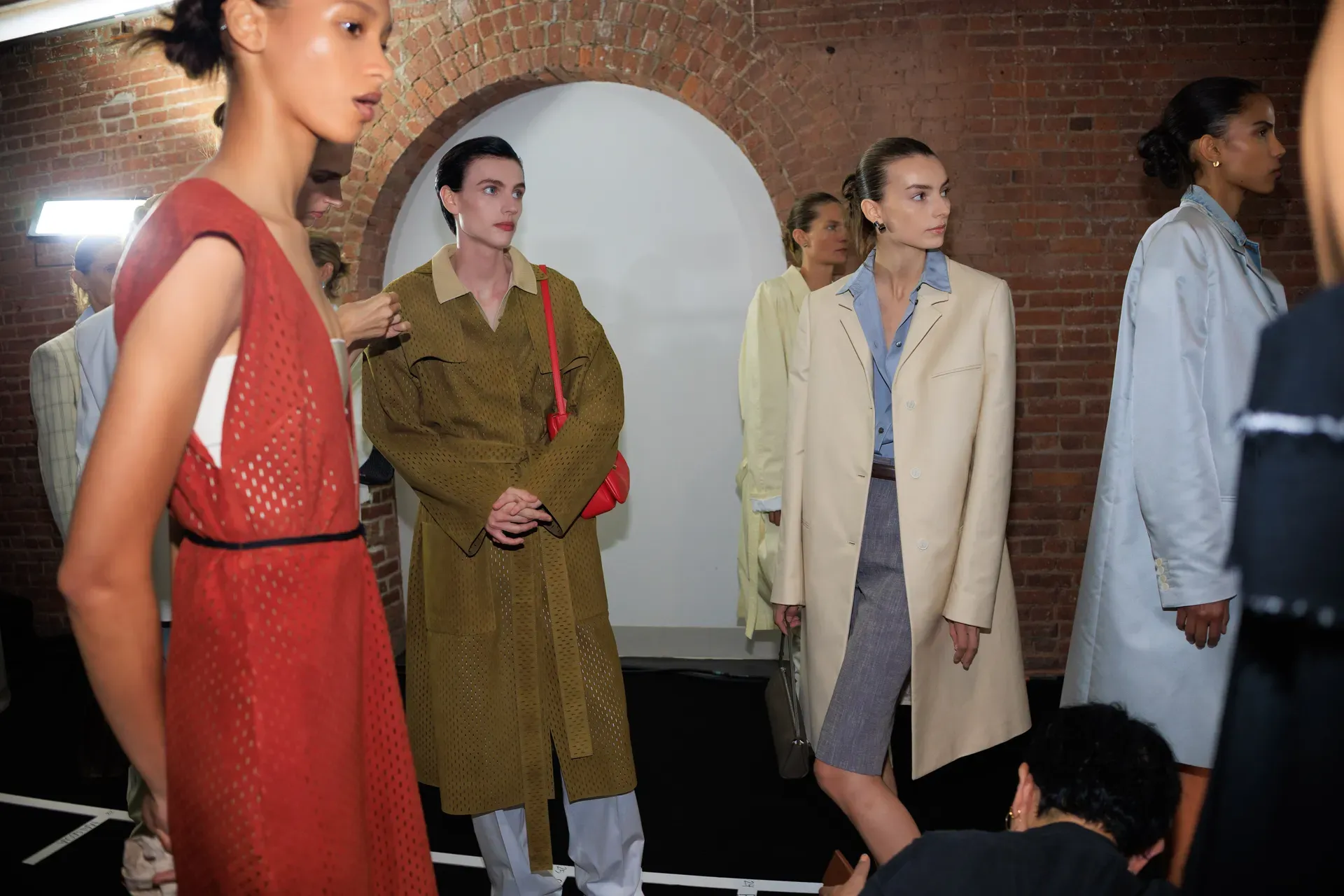
At the same time, the most decisive change running through the entire collection was spotted. This season, Leoni made the choice to remove menswear from the runway and focus entirely on womenswear.

What the Minimalist Sculptures Say
Amid a saturation in which every brand is calling for "quiet luxury" and minimalism, the answer Calvin Klein pulled out was its "archive." By summoning Walter De Maria's sculptures as stage pieces, it visualized the art-historical lineage of American minimalism and forcefully asserted ownership as the original house that first translated it into fashion.
Unlike the recent genderless minimalism represented by The Row, Leoni sharpened her distinct identity by setting "desire" as the ultimate object of minimalism.
Strategic Editing
A year and a half into her appointment, rather than maintaining two fronts at once, Leoni chose to solidify a single narrative, "the female body and minimalism," the house's most powerful weapon.
The decision to move menswear to private appointment channels and concentrate the runway's firepower on womenswear contrasts with the tendency of new creative leads to focus on excessive showmanship. It can be read as a model of a highly attuned creative lead who carries "the discipline of subtraction" all the way into how the collection is run.
The Business Model Proven by the Front Row
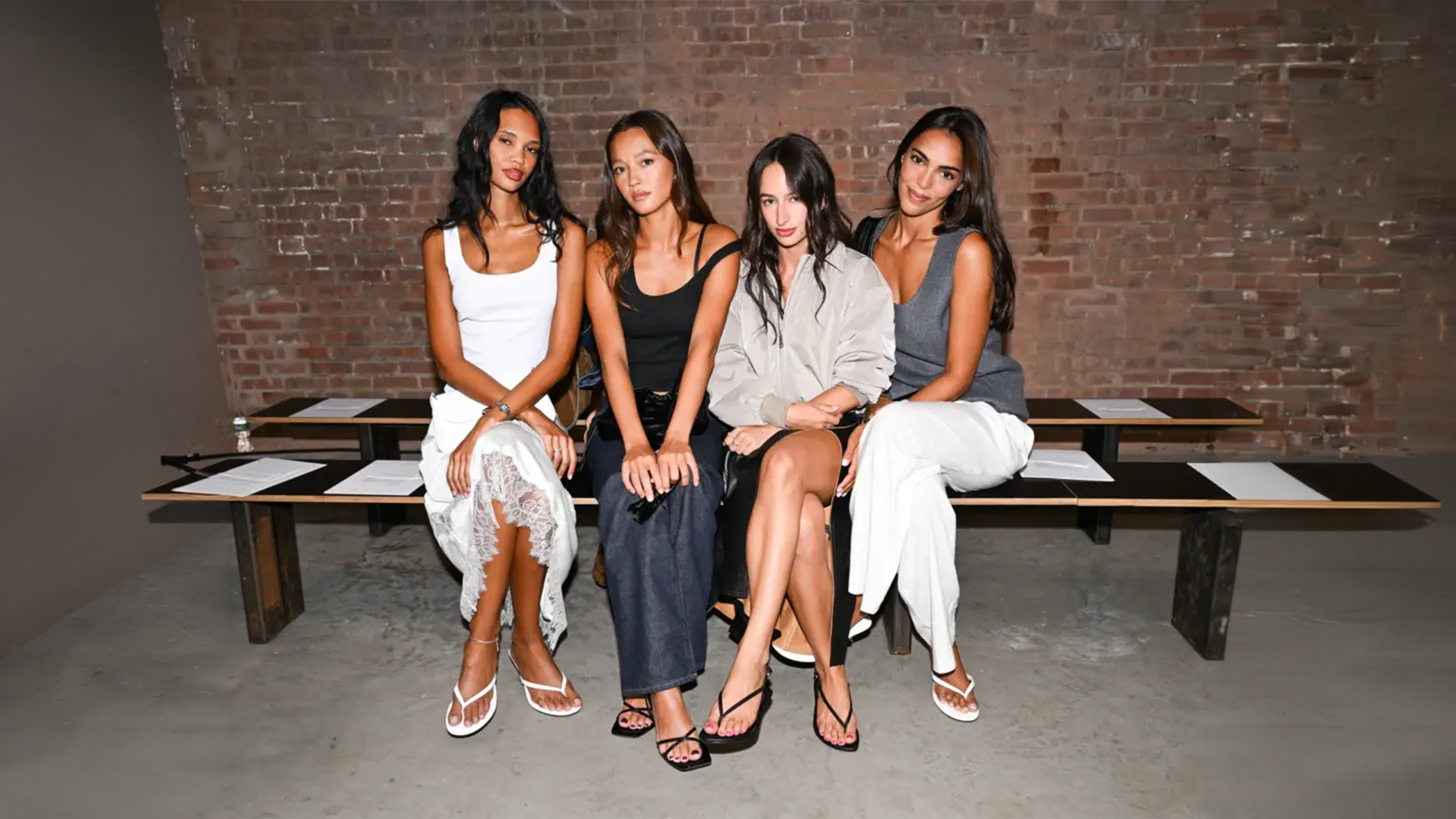
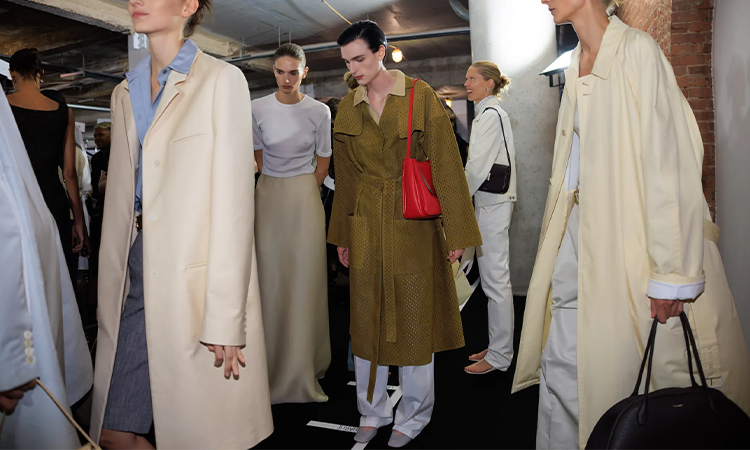
The front row, filled with everyone from Alexa Chung to TikTok- and Instagram-native influencers, wore products across every price point, from Calvin Klein Collection to CK Jeans. This reveals the core mechanism of the brand rebuilding project envisioned by parent company PVH.
Rather than generating direct sales, the top-tier Collection line serves as a pipeline that maximizes the brand's halo and draws customers into the real volume businesses, such as jeans, underwear, and fragrance.
Elevating Underwear DNA and Self-Referencing Bessettecore
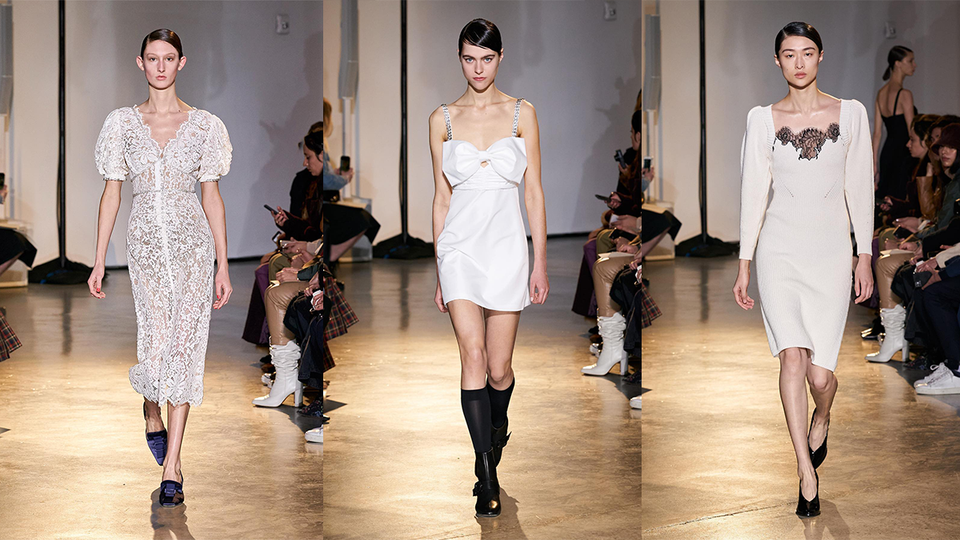
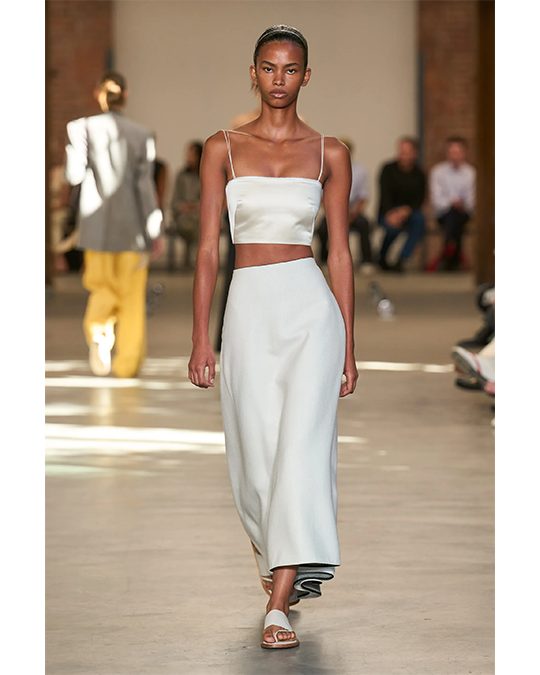
The technical peak of this collection lay in its restrained approach to exposure. Layered sheer straight skirts, slip dressing, and ultrafine silk knits elevated the grammar of underwear and slips, Calvin Klein's roots, into the language of a high-end collection.
In addition, pieces that hybridized sportswear elements with tailoring, such as a colorblock baseball shirt in silk cady, effectively injected a sportif sensibility. The summoning of '90s minimalism, led by the opening black column dress, is the result of the original house cleverly getting ahead of the "Bessettecore" trend, consumed continuously on digital platforms, by referencing itself.
💡 Buyer Insights
Get Ahead on the Share of '90s Minimal Items
Slip dresses, long pencil skirts, and ultrathin silk knits, categories the original house has reignited, are items that translate quickly into the contemporary market. We recommend prioritizing a look at the share of these pieces when building your SS27 line sheets.
Benchmark the Material Hybrid Formula
The combination structure of "premium material (silk cady) × sports silhouette (baseball shirt)" can be used as a useful reference point when planning private-label (PB) products or building set curations.
Track the Momentum of PVH / CK's Main Lines
Whether the Collection line's halo effect actually carries over into commercial sell-through needs to be verified from multiple angles, through PVH's next-quarter results and trends in volume arriving in Korea.