DUNST's Offline Expansion Formula
How DUNST, built online, is moving offline.

DUNST, the brand of CTDOTS, which began as an LF in-house venture in 2019 before spinning off, opened its first flagship store in Jeju this July, followed by a Seongsu flagship in September. In October, it is also widening its offline touchpoints with a long-term pop-up in Guangzhou, China, and a pop-up in Jamsil, Seoul.
Until now, the brand has expanded into around 20 countries primarily through online platforms and a global wholesale network, with almost no stores of its own. Now, DUNST is connecting the market potential it confirmed through online and wholesale channels to offline spaces.
What's especially notable is that it began its offline expansion at a time when revenue is growing. Revenue grew from about $9.4 million in 2021 to about $33 million in 2024, and this year it is on track to surpass about $36 million. It's a sequence of first confirming the market potential of its products, then expanding the brand experience.
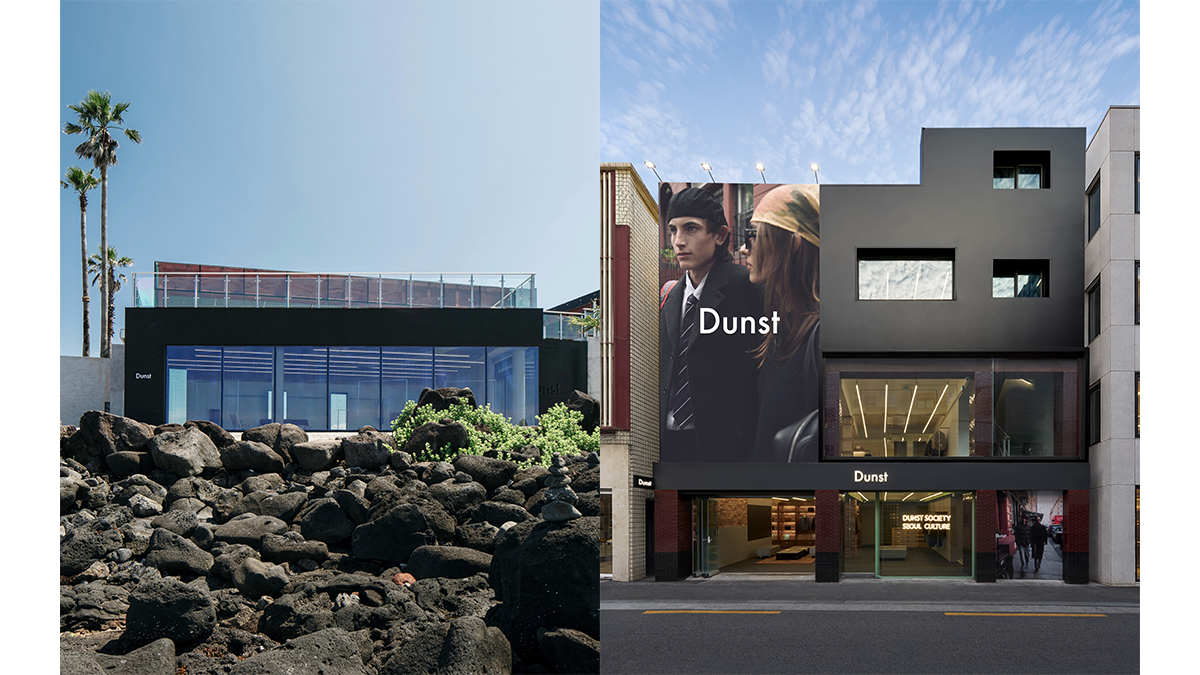
Jeju and Seongsu: Spaces Rewritten Through Local Context
As DUNST added offline stores, it didn't repeat the same format. It varied each space's atmosphere and role to fit the character of its location.
The Jeju flagship, "THE OCEAN," uses the ocean view as an architectural element, adding vintage furniture, high-end audio, and jazz music. The Seongsu flagship, by contrast, is built on a concrete structure that preserves the feel of the existing industrial space, with a culture lounge on the first floor, the women's collection on the second, and the men's collection on the third.
Though it's the same brand, Jeju unfolds its space around nature and rest, while Seongsu centers on the city and culture. It's an approach that goes beyond a store selling products, letting customers experience the brand within a local context.
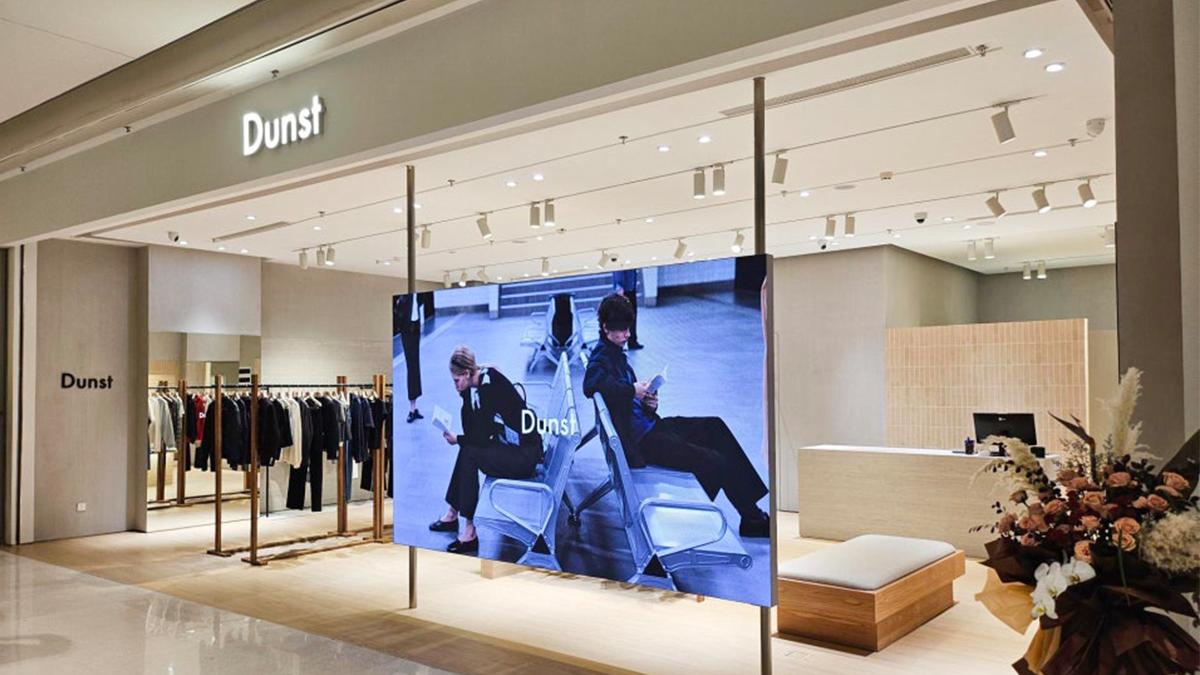
Guangzhou, China: Validated by Data, Tested Through a Long-Term Pop-Up
For its overseas offline entry, the brand chose a long-term pop-up.
The pop-up at Baietan MixC in Guangzhou will run for about five months, from late September 2026 to late February 2027. It's an approach that places a long-term pop-up between a short-term event and an official store to gauge local demand.
Online data also informed the choice of location. DUNST confirmed purchasing demand in the Guangdong region of southern China through its Alibaba Tmall flagship store before establishing an offline base in Guangzhou.
It's a sequence of first confirming demand online, then validating the market again offline. It's worth noting in that a long-term pop-up can be used to gauge local response ahead of opening an official store.

A Two-Track Expansion Matched to Market Maturity
DUNST doesn't apply the same distribution approach to every market. It varies its channels according to each region's distribution environment and consumer touchpoints.
In markets where wholesale distribution is well established, such as Europe and North America, it focuses on expanding its global wholesale network. Having already entered major select shops such as Bergdorf Goodman and Printemps New York, it is broadening its distribution through existing B2B channels.
In Asian markets such as China and Japan, on the other hand, it is expanding direct touchpoints with consumers through pop-ups and offline bases. It's an approach that distinguishes between channels already secured and channels newly needed in each market.

💡 Practical Reading for Buyers
The Changing Role of the Flagship
For brands that have secured market potential through online and wholesale channels, it's worth considering using a flagship not simply as a point of sale but as a space for delivering the brand experience.
Testing Markets Through Long-Term Pop-Ups
The approach of first confirming regional demand online, then gauging offline response through a long-term pop-up, is worth referencing in the process of overseas expansion.
Channel Mix by Market
Rather than applying the same distribution approach to every market, it's also worth considering varying the balance of wholesale and retail according to each region's distribution environment and consumer touchpoints.