Duolingo's Phonetic Fashion
The smartest promotional strategy for expanding a brand into another industry.
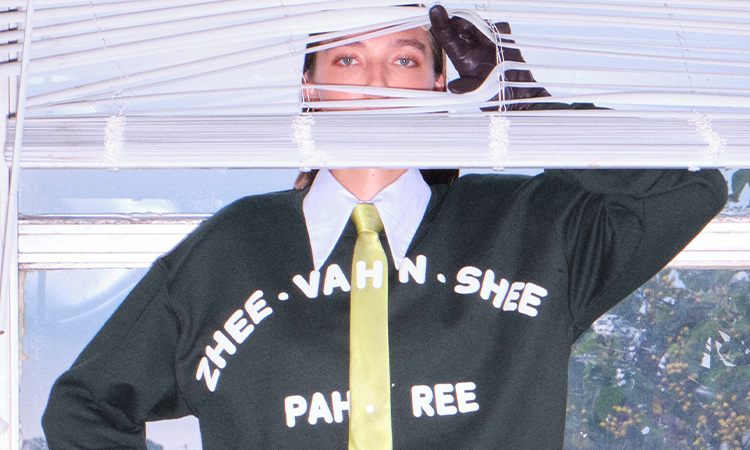
One of the most intriguing collections to appear at this New York Fashion Week (NYFW) came, unexpectedly, not from a fashion house but from language-learning app Duolingo.
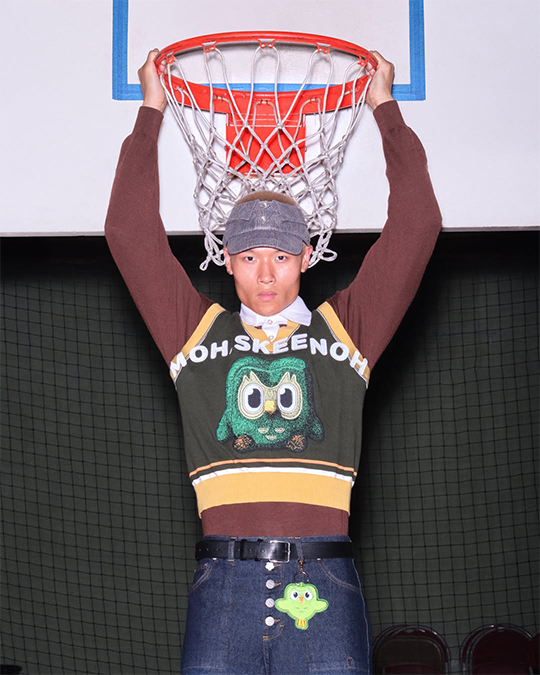
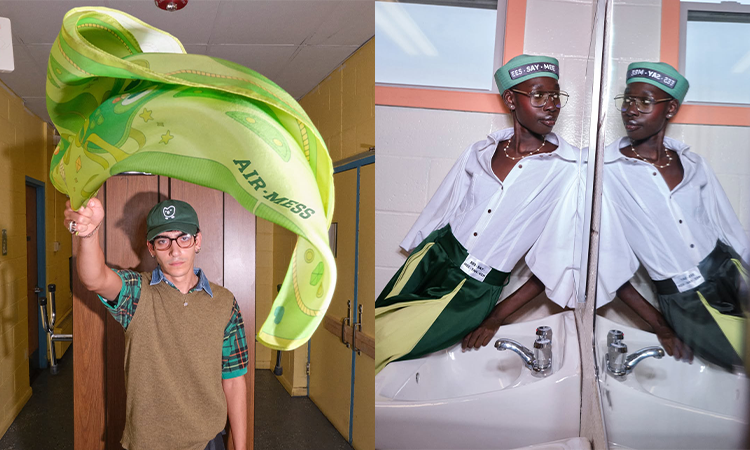
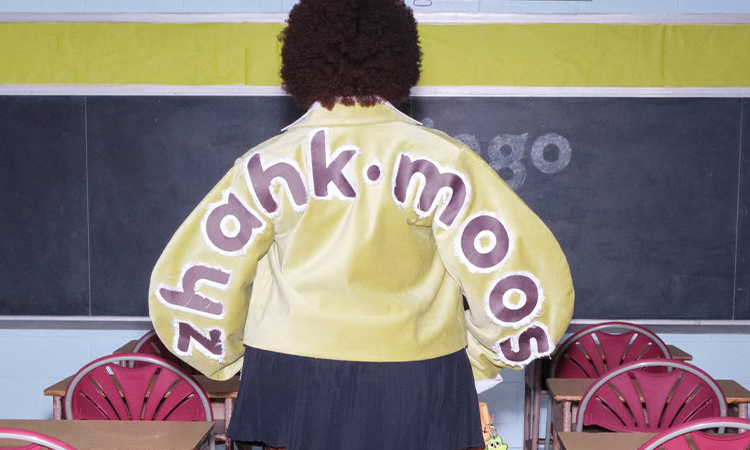
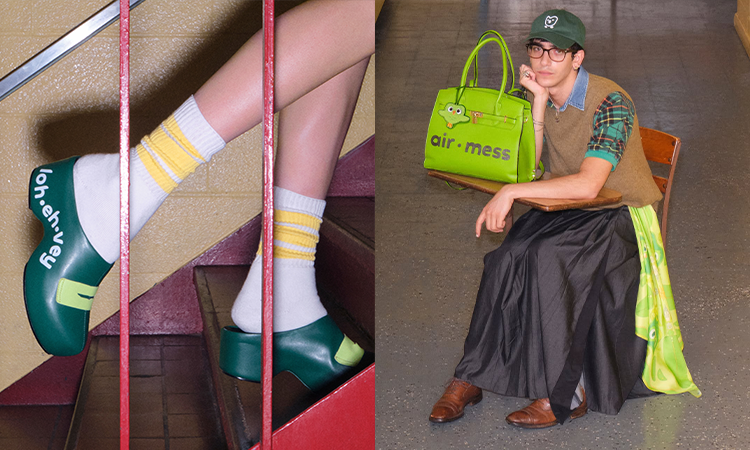
On the surface, the pieces in "The Phonetic Collection," a seven-piece capsule created in collaboration with designer Megan O'Cain, look like ordinary sportswear or tailoring. But instead of luxury house logos, they featured large phonetic spellings such as "air-mess" (Hermès) and "zhee-vahn-shee" (Givenchy), rendered in puff paint and 3D-printed embroidery.
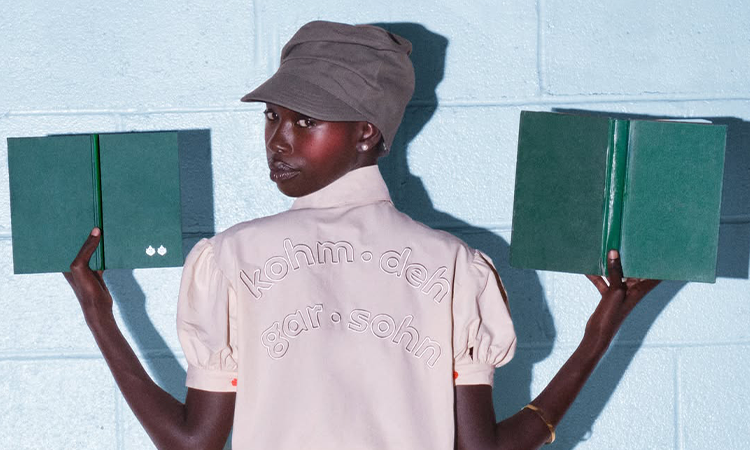
The rationale behind Duolingo opening a pop-up in the middle of New York Fashion Week and bringing these clothes was a single line from its own survey data: while 62% of Americans said they "could pronounce Hermès," only 15% actually got it right.
Even more interesting, this limited-edition collection couldn't be obtained with money alone. For some pieces, the pop-up entry process used points that users had built up through their daily learning streaks in the app, instead of cash.
While many non-fashion brands' entries into fashion week stop at simple logo exposure, Duolingo turned the intersection between its service and fashion culture into a single campaign.
Duolingo Solves the Brand Pronunciation Problem
When food and beverage or automotive brands enter fashion week, they commonly use famous celebrities or logos to gain exposure. But it isn't easy to explain why the brand needs to be at fashion week at all.
Duolingo, by contrast, picked up on a small friction that already existed within fashion culture: the difficulty people feel when pronouncing luxury brand names. And it created a link showing that solving this is exactly what its core business, language learning, does.
Its own data, "62% said they knew, but only 15% got it right," became a device that explained in a single sentence why Duolingo appeared at fashion week. Running out-of-home (OOH) ads on New York's Canal Street, famous for its counterfeit market, can also be seen as extending the campaign's message of "real and fake, knowing and pretending to know" all the way to media selection.
A Drop Where Community Commitment, Not Money, Becomes Currency
The most interesting part of this campaign lies less in the design of the clothes than in how they're obtained. Instead of opening their wallets, pop-up visitors used the points they had built up in the Duolingo app to enter for some of the pieces.
Points are a measure of how consistently a user has kept up their learning in the app. Duolingo turned this behavior, accumulated inside the app, into a condition for participating in a real-world offline experience.
In the end, rather than stopping at selling limited-edition products, it connected user behavior in the app to participation in an offline event. Even on the external stage of fashion week, Duolingo carried on its core service experience.
Turning Phonetic Spelling into Fashion
The idea of spelling out brand names phonetically could risk mocking the luxury houses or the culture involved. But Duolingo placed the object of the humor not on any particular house, but on our own experience of getting flustered in front of difficult foreign pronunciations.
In addition, by using phonetic spellings instead of the brand logos themselves, it allowed people to recognize which brand each piece referred to without directly copying any house. On top of that, handcrafted details from designer Megan O'Cain, an alum of Netflix's "Next in Fashion," such as puff paint and 3D embroidery, turned an idea that started from language learning into real fashion.
Emerging Designer Megan O'Cain
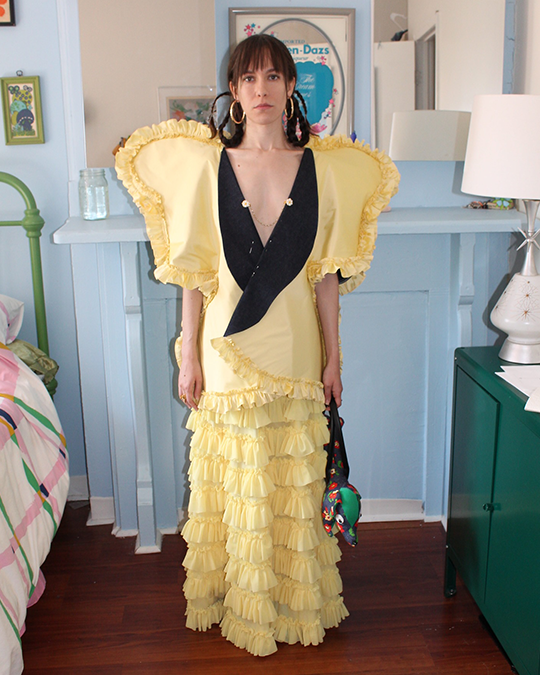
This capsule was completed in collaboration with Megan O'Cain, a New York designer and alum of Season 2 of Netflix's "Next in Fashion." O'Cain is a rising talent recognized for her witty curved silhouettes, sensorial textures, and detailed handcrafted finishes (puff paint and 3D embroidery).
When Duolingo entered fashion week, choosing an emerging designer with a flexible narrative and original sensibility as its creative partner, instead of a heavy, established house, became the choice that best delivered the brand's playful message.
💡 EDITORIAL SMALL TALK
A Smart Promotional Strategy for Expanding a Brand Beyond Its Industry
What makes Duolingo's case interesting isn't the fact that it entered fashion week, but that it redefined, in its own language, a problem that already existed within fashion. By turning the small inconvenience of pronunciation into content and connecting the app's features to an offline experience, it used fashion week not merely as a space for exposure, but as a stage for brand experience.