The Branding Structure of LCDC™
An analysis of the four strategies that let LCDC™ break through the limits of a private label to grow into a global contemporary brand.

A company's private label (PB) usually starts out as "a basic lineup with price competitiveness." But LCDC™ from SJ Group, which began in 2023 as the private label of a multi-brand store, has leapt to become a K-contemporary label in just a few years, landing in 21 global stores across six countries, including France, China, and Japan.
At the heart of this head-on breakthrough was the carefully crafted strategic design of a specialist distribution company. We analyze the four core strategies that let LCDC™ break through the limits of being a "private label" and establish itself in the global market by concentrating, into its own brand, the muscle SJ Group built by distributing international brands (Kangol, Helen Kaminski, and more) in Korea.

1. Building the Brand Universe in Advance Through "Space"
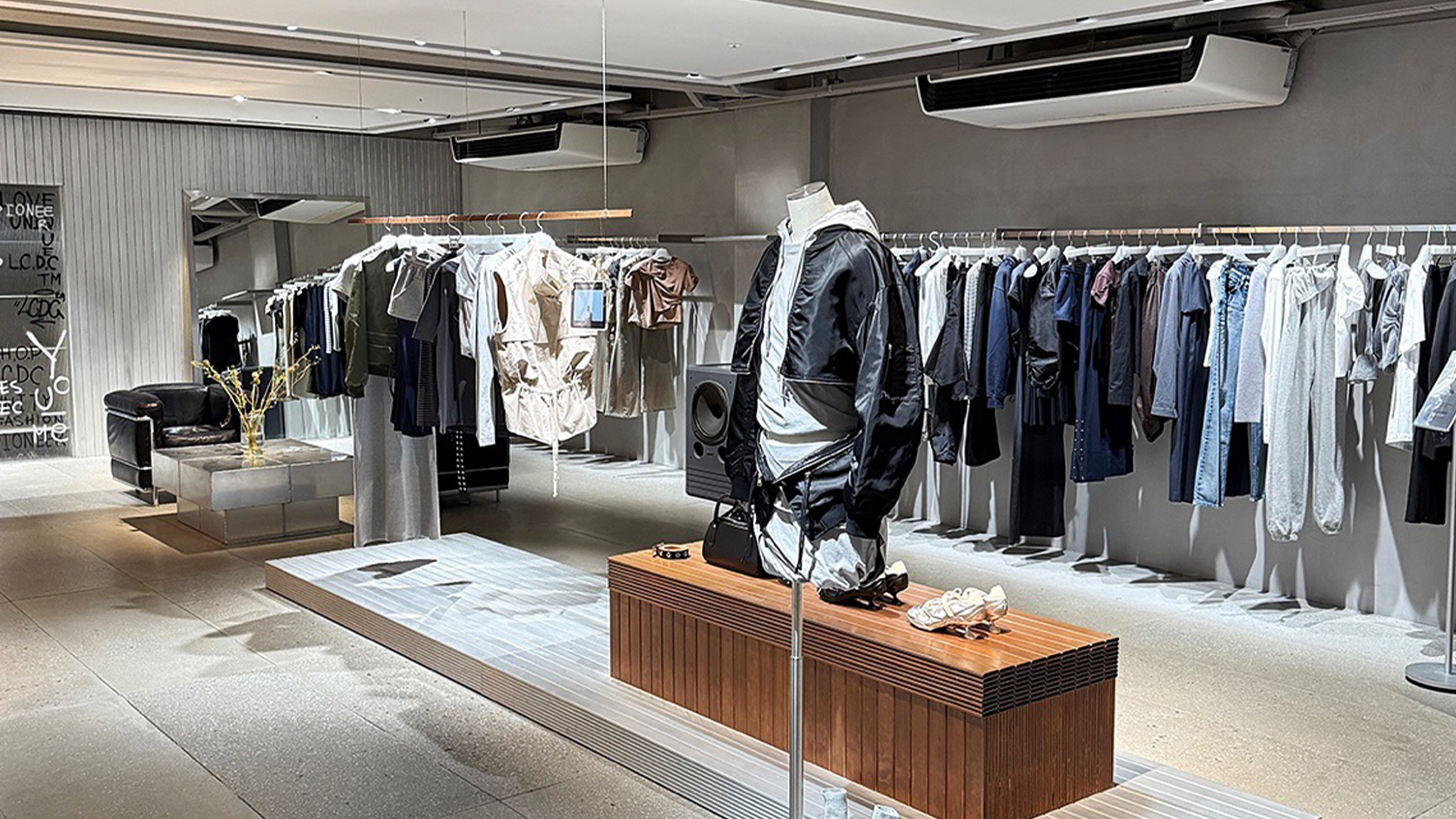
Unlike most new brands, which start with product development, SJ Group put an offline space that embodies its universe first.
"LCDC SEOUL," a cultural complex that opened in Seongsu-dong in December 2021, is the brand's hub, combining architectural aesthetics, lifestyle, and F&B. Under the philosophy of "a story within a story (Le Conte des Contes)," the meaning behind the name LCDC, the company first built the sensibility and narrative structure of the space, then in 2023 launched its own apparel brand, LCDC™, inside the select shop within it.
Rather than making products first and attaching a narrative afterward, this contrarian strategy of completing the universe and visual tone and manner through the space and then translating it into clothing became the catalyst that established the brand's position in one stroke.
2. Transplanting Decades of Licensed Distribution Assets into the Brand
The biggest hurdle for new independent designer brands is the cost of finding and developing overseas buyers. LCDC™ applied directly to its own private label the "global network and practical distribution know-how" SJ Group has built over decades of working with overseas buyers and international headquarters of global brands.
It started with market analysis capabilities to identify which markets want which designs and pricing, a systematic approach to global wholesale contracts, and overseas logistics infrastructure already in place. This served as a decisive asset that shortened by years the costs and trial and error new brands face when entering the global stage.

3. Branding by Targeting "Overseas Distribution" First
LCDC™'s most radical distribution strategy was getting ahead in global channels from the very start, going beyond the usual sequence of gauging domestic response first.
Early in its launch, it entered Printemps department store in Paris and took part in a local Paris showroom, securing touchpoints with more than 200 global buyers. Building on the brand stature it gained in the Paris market, it quickly diversified its distribution to leading contemporary multi-brand stores in China (I.T, LOOKNOW, and others), a pop-up at Shibuya PARCO in Japan, and Shanghai Fashion Week.
By first earning recognition at overseas luxury and contemporary multi-brand stores, it broke the one-dimensional notion of being "a company's in-house private label" and successfully redefined its position in the market as "a global K-contemporary label."

4. A Two-Track Structure of Gathering and Executing Sensibility Through the "SHOP LCDC" Multi-Brand Store
Alongside developing the LCDC™ brand, SJ Group has been buying and curating global emerging designer brands, such as Ottolinger, Martine Rose, and Ashley Williams, through its own multi-brand store, "SHOP LCDC."
Beyond generating retail revenue, this multi-brand store works as a "real-time data antenna" that collects the latest sensibilities and responses in the global fashion market. Trends, materials, and consumer shifts confirmed through curation are fed straight back into product planning for its own LCDC™ brand. In other words, by building a virtuous two-track structure of [global brand buying (absorbing sensibility data) + private-label development (materializing and productizing that sensibility)], it created a structure that flexibly leads market trends instead of chasing them.
💡 EDITORIAL SMALL TALK
The structure in which a specialist company that once distributed other companies' brands plans its own brand and, in turn, sells it on the global stage is a prime example of how a distribution company's business model is evolving. As with MISTO and HAGO HAUS, the line between distribution and brand incubation is gradually blurring. LCDC™'s strategy, expanding the concept of a private label beyond a simple value line into "an original label that concentrates the company's distribution expertise and global sensibility," and drawing a distribution roadmap that connects Paris and Seongsu, offers a precise milestone for brands dreaming of global expansion.