The Men's Activewear Market Is Exploding
The luxury athleisure market compounding at 10.45% a year — and men's activewear detonating at 9.85%.
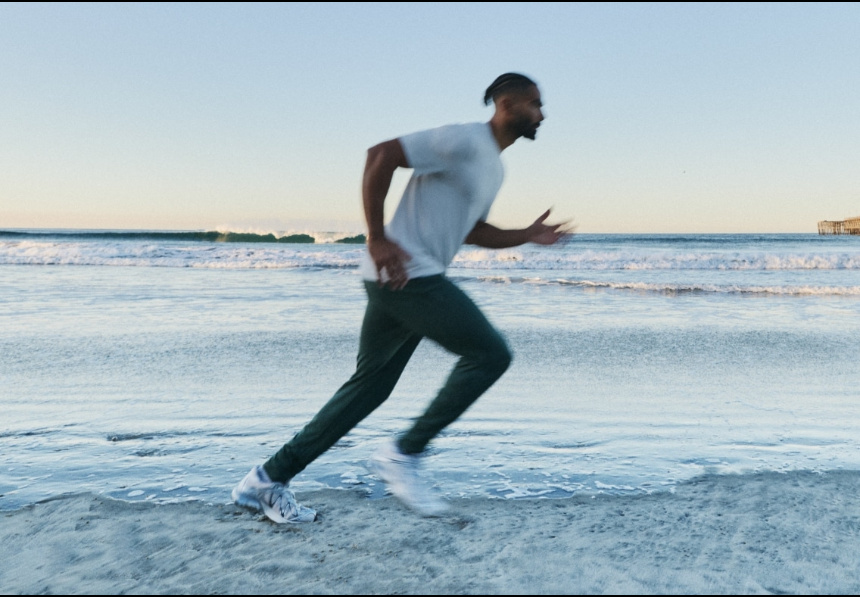
As of 2026, the global athleisure market has reached $468.1 billion. But the number worth watching is elsewhere: while the mass market claims over 65% of total revenue, the premium segment is growing at an overwhelming 10.45% CAGR — pulling the market's real margins.
The question "will expensive activewear really sell?" is over. Global consumer spending now flows in this order: dining out, travel, fitness, fashion. Premium athleisure has settled in as the irreplaceable essential — resolving two of those desires, 'fitness' and 'fashion,' in a single garment.

The Two-Sided Squeeze on Lululemon
Lululemon
long the absolute standard of the premium legging — is now under powerful challenge from above and below. From below, 'dupe culture' and its cheap replicas gnaw at the market; from above, Vuori and Alo Yoga wield luxury lifestyle weapons to open affluent consumers' wallets.
Vuori
A strict 'fabric-first' approach: refined, logo-minimal design fused with proprietary in-house textiles (DreamKnit) and perfect fit. Its strength is versatility — flowing naturally from workout to everyday social life. Where Lululemon speaks 'achievement and optimization,' Vuori sells the joyful play of 'balance and delight.'
Alo Yoga
Fusing technical performance with stylish street sensibility, Alo made athleisure a wellness lifestyle choice. Through a powerful DTC model — Alo wellness retreats, lifestyle lock-in via its dedicated app — it's maximizing customer lifetime value.

Men's Athleisure: 9.85% CAGR
The steepest-growing segment in this market right now is menswear (9.85% CAGR). It's why Lululemon and Alo Yoga are belatedly racing to expand their male customer base, actively partnering with global male athletes like Lewis Hamilton.
Vuori, meanwhile, holds powerful hegemony precisely here. Unlike brands that began in womenswear and expanded to men, Vuori started as menswear from day one and added womenswear in reverse. That native identity — understanding the ease and fit of the male body best from birth — is Vuori's core differentiator in the men's athleisure market.
The Practitioner's Angle
The Collapse of Price Resistance
Leggings commanding $110–140 apiece has already become the global standard. It means the price resistance line for premium activewear has fallen in the Korean buying market, too — lowering the psychological barrier to bringing in high-sensitivity brands.
Strengthening the Men's Curation
On Running, HOKA, and Salomon are already proven through select shop sales. Now is the moment to strengthen the 'men's uniform for both fitness and the commute' section — mix-matching Vuori's joggers or technical outerwear into that base.
Dividing Roles with the Offline Showroom
Vuori has opened its first Seoul store, beginning its assault on Korea as a core market. If the directly operated store serves as 'the showroom where the brand narrative is experienced,' the select shop must differentiate through the art of 'styling curation' — proposing Vuori mixed among diverse sneaker labels and independent brands.
Editorial Small Talk
All-Out War Over the Chinese Market
When Lululemon executed its most aggressive bet — expanding from 100 to 220 stores in China — Vuori answered with counter-fire, simultaneously opening its first Beijing store. The pride fight that began on the American West Coast has moved, intact, onto the retail battlefield in the heart of Asia.