Miu Miu, the Brand That Saved Luxury
The secrets behind Miu Miu's solo run: 35% annual growth, twenty consecutive quarters of expansion.
The luxury market's FY2025 report card, delivered in March 2026, was a study in stark contrast. Amid slowing consumption, stubborn inflation, and geopolitical instability, the major houses of LVMH and Kering slid together into negative growth — while Prada Group's Miu Miu ran on, alone.

This is no single season's viral flare. As of FY2025, Miu Miu set an unprecedented record: 35% annual growth, and a full twenty consecutive quarters of expansion. While the Prada brand proper slipped slightly (-1%), Miu Miu traced an entirely different growth trajectory within the same group — becoming the recession-era luxury market's sole answer. Here's an analysis of its scale-up strategy and practical insights.

The Only Growth Engine in a Negative-Growth Era
The reason Miu Miu's numbers frighten: they were drawn, single-handed, from the worst macro environment — one dragging the whole industry down together.
While LVMH's fashion and leather goods division collapsed -5% and Kering -14% (Gucci -22%), Miu Miu posted a surreal +49% growth rate in the first half of 2025 alone. Just three years ago, Miu Miu made up only 22% of the group's retail revenue; it has since expanded to 31%, elevated to a twin engine standing shoulder to shoulder with Prada itself.

Miu Miu's solo run is all the more decisive given the timing: Prada Group has just completed its $1.4 billion acquisition of Versace. For the next year or two, the margin dilution and integration risks of absorbing Versace can now be fully offset by Miu Miu's overwhelming cash generation. In other words: Miu Miu is holding up the group's entire terrain.
The Perfect Match of Editorial Hype and Real Transactions
The fashion scene teems with 'hollow' brands — pumped up by media and social feeds, never converting into actual store revenue. Miu Miu, by contrast, is the most ideal case there is: the symbolism of ranking No. 1 on the Lyst Index and its actual revenue growth aligned as if drawn with a ruler.

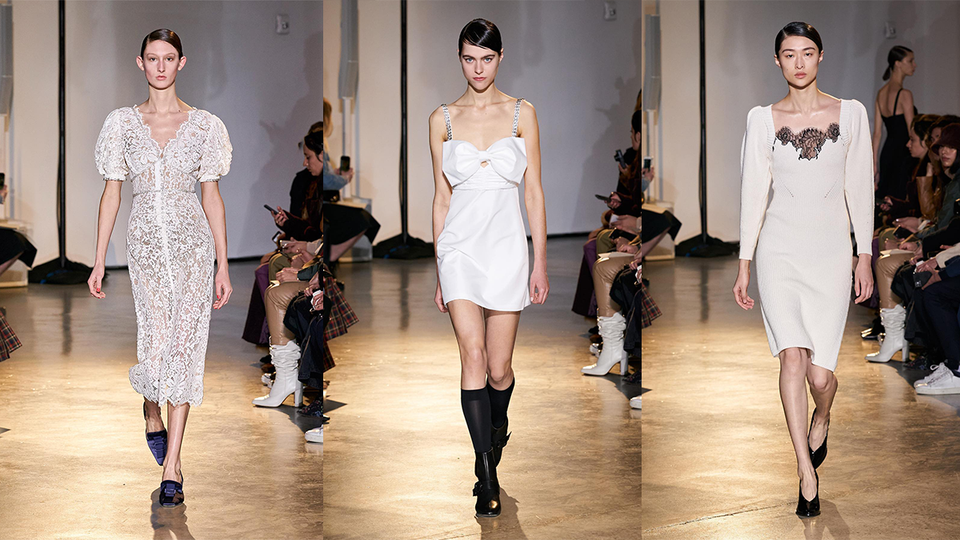
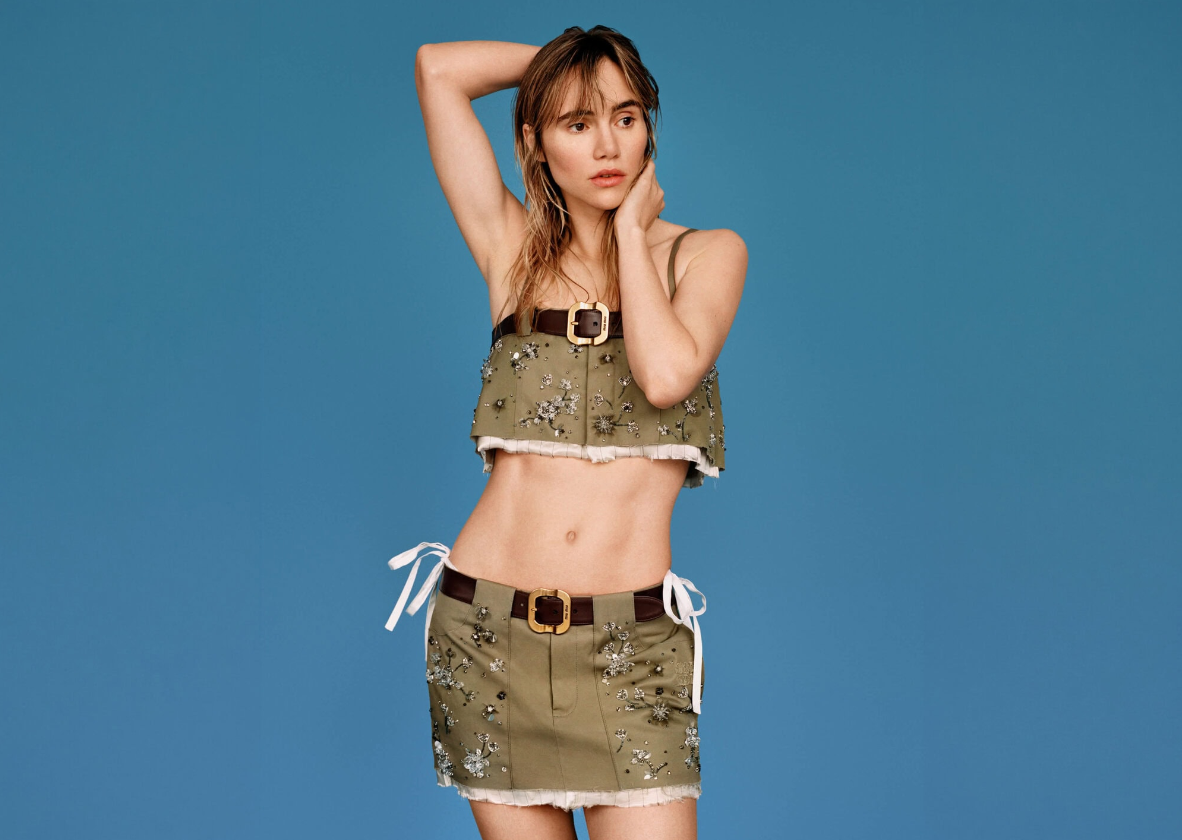
Amid the global downturn, the alternative Gen Z chose is 'aspirational realism' — light minimalism fused with practicality. The trends Miu Miu proposed — thin slide shoes, micro miniskirts, meticulous knit tops — ruled the Lyst search data and the store receipts at once. The result of proposing real-way looks: high-end sensibility kept intact, wearable in daily life straight off the rack.

Intellectual Play: Running a Book Club
The core of how Miu Miu holds a fandom unmatched by other luxury brands lies in 'cultural territory expansion' beyond the product. Instead of merely opening pop-ups to sell clothes, the brand wields a meticulous community-building strategy that stirs consumers' intellectual pride.
The definitive cases: 'Summer Reads,' curating and distributing selected women writers' works free on beaches; the 'Literary Club' book discussion clubs held in Milan, New York, and beyond; and 'Tales & Tellers,' the storytelling project collaborating with emerging female directors.
If Prada proper symbolizes a heavier, more precise 'art and intellect,' Miu Miu proposes witty, rebellious 'intellectual play.' In 2026 — when knowledge and cultural taste have become the new marker of social standing (the status economy) — to wear Miu Miu is to purchase more than a display of wealth: it is to buy belonging. "I am a member of the culturally awake, intellectual community."

Vintage Upcycling and Real Life
Miu Miu never spent sustainability as a marketing term — it folded it, cleverly, into its uppermost luxury line. The 'Miu Miu Upcycled' project — vintage fabrics deconstructed, recombined, released as limited editions — offers high-income, environmentally minded Gen Z an irreplaceable collector's value. The house's signature deconstructivist aesthetics — the innocent details of childrenswear references crossed with the sensual gaze of the adult woman — fuse with the fabric's own history, forming an archive that cannot be copied.

Sourcing Insights for the Buyer
Claim the Exploding 'Leather Accessories' Pie First
Prada Group CEO Andrea Guerra stated officially: "There remains vast undeveloped potential in Miu Miu's leather goods category." Indeed, the hidden protagonists pulling Miu Miu's growth over the past three years have been its bag and shoe lines. In select shop buying, the timing has come to break from apparel-centered assortments and boldly enlarge the budget pie for meticulous, practical leather accessories.
The Hint in Regional Growth Momentum
By H1 results, the Middle East posted the highest growth (+26%), with North America close behind — an indicator that global luxury's biggest spenders are on the move. Korean retailers, too, should rebalance their VMD and curation lineups to match the diversifying nationalities of inbound tourists (rising Middle Eastern and North American share).