Salomon's Distribution Bet
An analysis of Salomon's distribution strategy through Amer Sports' 2026 results.
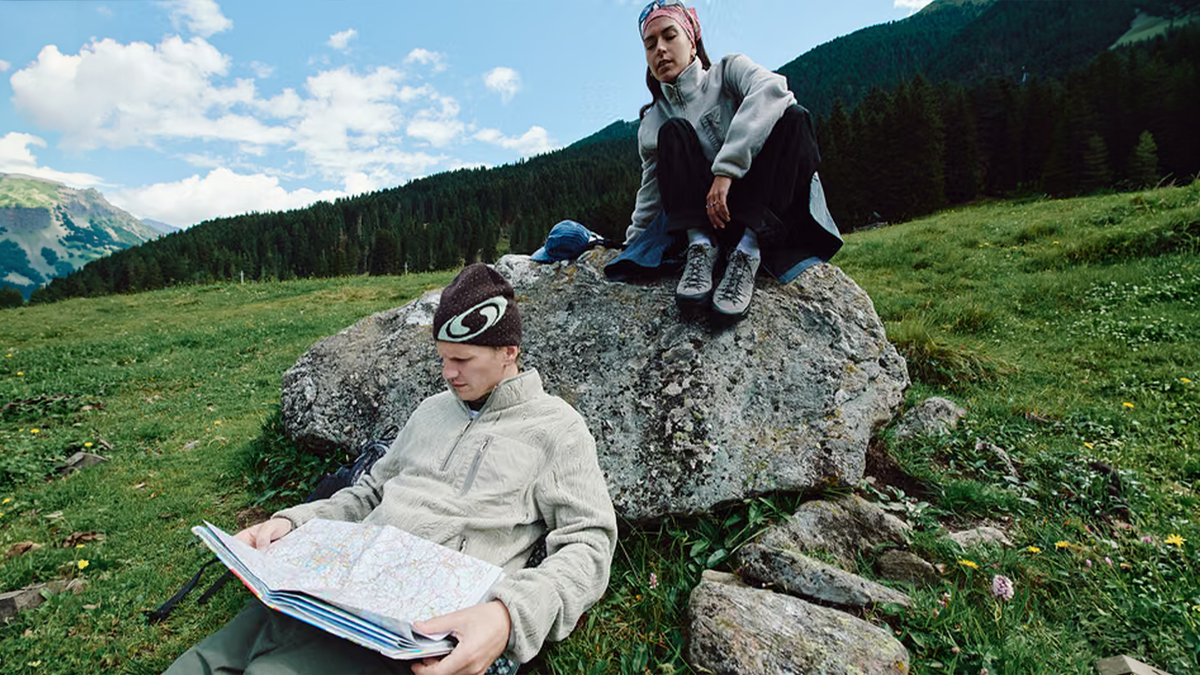
In the global sports and performance footwear market, channel strategy is often consumed as a simple binary: either maximize the purity of your own e-commerce and directly operated stores while tightening wholesale channels to increase in-store scarcity, or, conversely, boldly load volume into wholesale networks to expand mass reach.
But Amer Sports' moves, revealed in its Q2 2026 earnings release, show that strengthening owned channels and growing the wholesale network can happen at the same time.
In Q2 2026, wholesale channel revenue for Amer Sports' Outdoor Performance segment, where Salomon is the flagship brand, grew 25% year over year. Management explained that this was driven by high sell-through and organic reorders centered on Salomon Sportstyle, along with an expanded store count centered on key partners such as Nordstrom, Foot Locker, and JD Sports.
It's worth noting that wholesale results are being driven not by simply pushing out volume (sell-in), but by a virtuous cycle of pre-orders, real sell-through, and reorders.

Different Distribution Strategies Amid the Running and Outdoor Boom
Though they stand amid the same global running and outdoor trends, the distribution strategies major brands are taking differ from one another.
- On: A structure that strategically manages wholesale volume and pursues brand scarcity and DTC-centered growth.
- Arc'teryx: A strategy that keeps DTC-centered growth as its core axis while selectively expanding premium partnerships centered on specific categories such as footwear, Veilance, and womenswear.
- Salomon: A partnership acceleration strategy that maintains collaboration with a limited set of key partners while pursuing growth in both DTC and wholesale channels.

These strategic differences emerge according to each brand's category spectrum and distribution positioning. Salomon's portfolio structure, with a lineup that has expanded across lifestyle as a whole, from performance footwear and sportstyle (XT-6, XT-Whisper, and more) to outdoor apparel, bags, and socks, provides an environment for rolling out a diverse assortment by channel.
Dividing Roles Between Key City Epicenters and Partner Doors
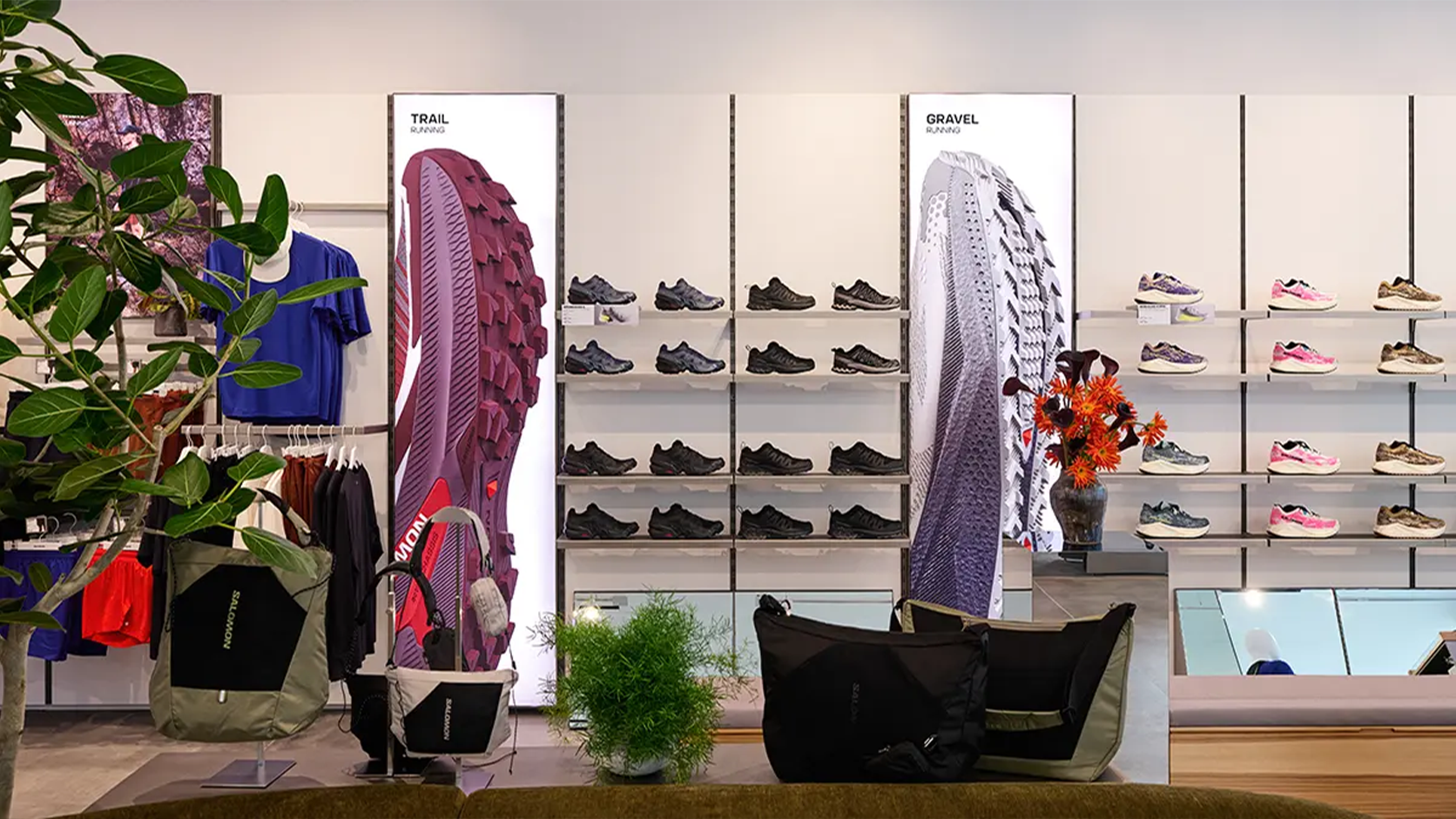
Salomon's urban distribution approach is based on an epicenter strategy built around key hubs. It opens its own flagship stores (such as its Fifth Avenue flagship in New York) in prime locations in major cities, including New York, LA, Miami, San Francisco, Paris, London, Shanghai, and Tokyo, to strengthen brand heritage and customer experience.
Around them, it precisely layers partner stores of global sneaker retailers such as Foot Locker and JD Sports, as well as key specialty stores.
If its own flagship stores handle the brand's iconic experience and stature, partners' wholesale doors provide broad customer touchpoints and distribution speed. For Salomon, the wholesale channel works not in opposition to DTC but as a structure in which each plays a different role to complete its market influence.
From a Ski Workshop to a $2 Billion Global Sports and Outdoor Brand
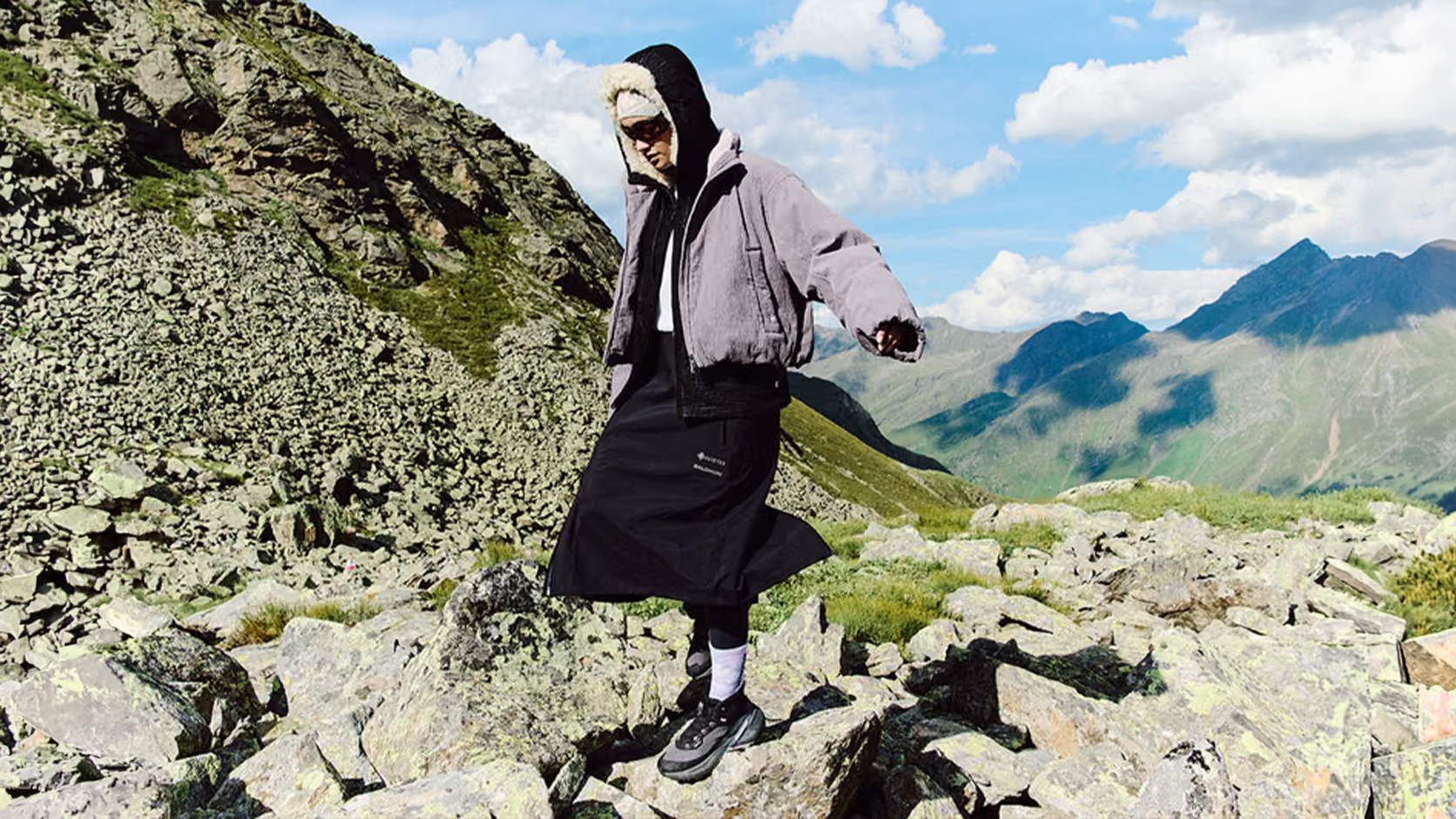
Behind Salomon's distribution overhaul lies a sweeping change in its business mix. Founded in 1947 as a ski-edge workshop in Annecy, France, Salomon has seen the revenue share of winter sports equipment, its historical roots, shift from 46% in 2022 to around 25% today in 2026.
Conversely, the share centered on footwear, apparel, and lifestyle products has expanded to 75%. Thanks to this shift in business mix, total Salomon brand revenue surpassed $2 billion in 2025, and in Q2 2026, the Outdoor Performance segment continued its strong growth, posting 37% revenue growth.
Alongside the XT-6 lineup that captivated the sportism and street scenes, gear such as backpacks and socks is growing as well, solidifying its position as a four-season sports and outdoor brand.

Growing Demand in Asian Markets and the K-Culture Connection
One of the key pillars supporting Salomon's global growth is the Asian market. Amer Sports has stated in official materials that Salomon's brand awareness and demand are expanding rapidly across Asia, and in Q2 2026, it continued adding stores in key countries, including Korea, Japan, and Australia, increasing its touchpoints.
The appointment of K-pop artist JISOO as a global ambassador in May 2026 also aligns with the brand's growth direction. By adding the reach of K-pop culture to its traditional trail running heritage, it's interpreted as a long-term collaboration aimed at broadening its base among younger consumers and female consumers, which the brand has consistently emphasized.
💡 Buyer Insights
Watching the Expansion of Wholesale Partnerships
Since Salomon is carefully expanding its wholesale network around a small number of key wholesale doors, retail buyers looking to strengthen their sportstyle and high-sensibility contemporary assortments should keep monitoring Salomon's wholesale partnership expansion and the terms it offers.
Using Subcategories Beyond Footwear
If entering a footwear account is difficult due to high order demand for its core sneaker lineup, you can consider Salomon's fast-growing bag (backpacks and harnesses) and sock categories as a low-risk lineup for spot entry.
Responding to Women's and Lifestyle Lineups
Since Salomon is making expanded touchpoints with young female customers a key source of momentum, it's necessary to proactively secure women's-exclusive collections, colorways, and exclusive size runs when setting buying orders.