Studio Nicholson's First Runway in 16 Years
Nick Wakeman who loves clothes but hates fashion. Why she staged the show she refused for 16 years, and executed a rebrand.
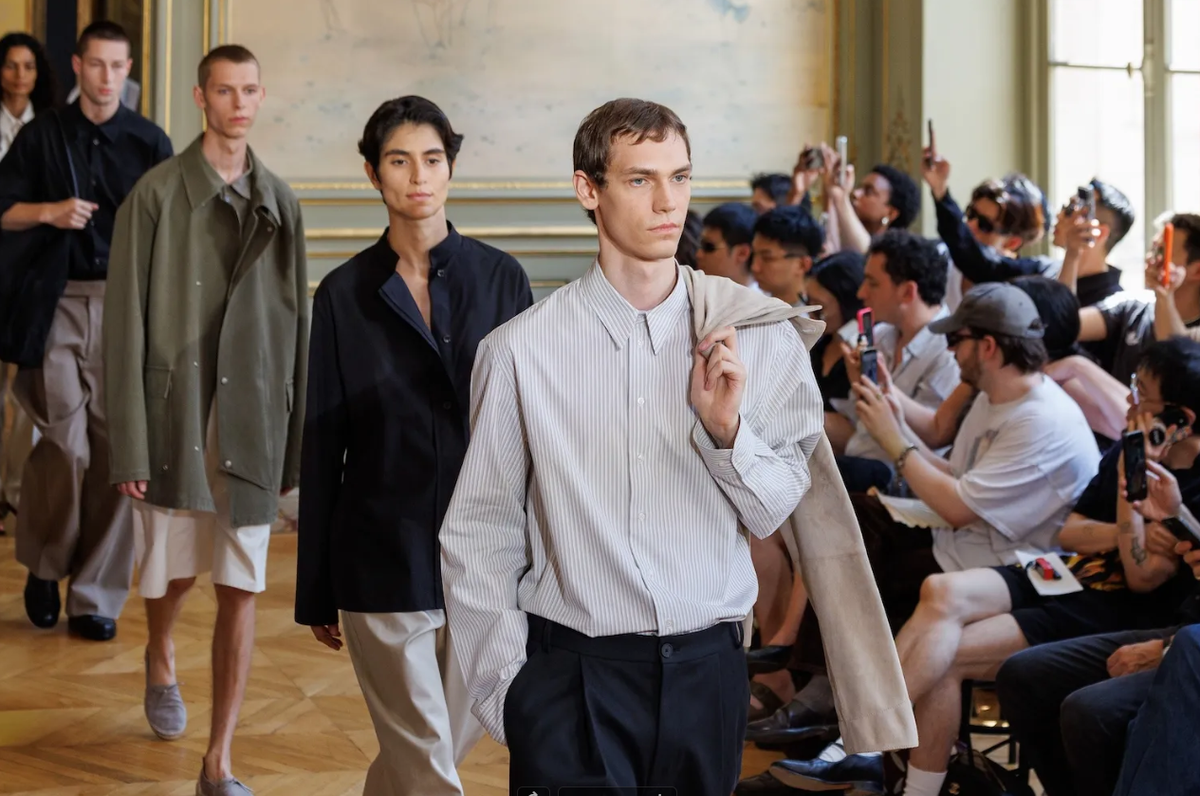
"I don't like fashion. I just like clothes."
Nick Wakeman, who founded her brand in London in 2010, has repeated this like a refrain.
True to her philosophy, Studio Nicholson never once held a fashion show in sixteen years.

Without a single loud runway, it built a loyal fandom worldwide — becoming the byword for 'architectural wearability' on nothing more than a crisp cotton shirt and voluminous chino pants.
Then on June 27, during Paris Men's Fashion Week, this obstinate brand held the first runway show in its history, at the splendid Hôtel d'Évreux. An 'off-schedule' show, no less — its name never even placed on the official calendar. Why did she suddenly choose the runway?

"This Is Who We Are"
Recalling the runway, Wakeman confessed with a joke wrapped around the truth: "It was the most expensive seven minutes of my life."
For someone who hated wasting business capital, her reason for spending a fortune on a show was simple:
"People had to see the clothes move. A frozen photo on a website or Instagram can never fully deliver how our clothes fit."

As she said, the SS27 collection's title was 'This Is Who We Are.'
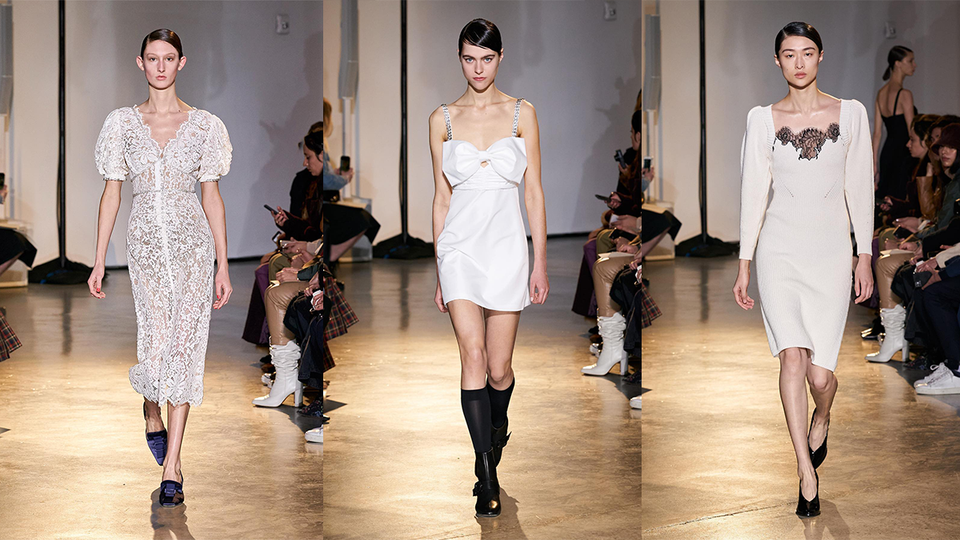
There was no shocking new product to startle the world. Instead, the brand's signature 'Sorte' pants were elevated in a more luxurious bonded gabardine, and the existing archive — rippling fluid trousers, mariner stripe shirts — was refined to its extreme and placed on stage. Not chasing newness for newness's sake, but showing "the quiet authority of knowing when to stop."
The result was a triumph. Global magazines named this quiet salon show — absent even from the official schedule — one of the 'seven highlights of Paris Men's Week.'

Casting Off a 16-Year-Old Logo
On the Paris debut stage, what drew buyers' eyes as much as the clothes was the newly changed logo.
Wakeman confessed: "In the early days, we had no money — someone and I sat at a kitchen table and made the logo for five pounds, and I'd been using it ever since."
As the brand grew in stature, the old logo began to feel like a supermarket sign — so, sixteen years on, she executed a sweeping rebrand built on the celebrated typeface Antique No. 6.

This rebrand and the Paris debut runway are the calculated opening salvo of a 'global scale-up.' Wakeman claimed she held the runway for romantic reasons — but the CEO standing beside her had his gaze fixed squarely on business.
Studio Nicholson currently operates directly run stores in London, Shanghai, Tokyo, and Seoul. It plans twelve additional stores in China alone, and — weighing Korean market expansion and even a New York entry — is preparing a ferocious push into Asia and North America.

"I think that even 200 years from now, if we're living on the moon, we'll still be wearing trench coats and jeans."
Wakeman's philosophy interlocks perfectly with 'intentional consumption' — the core trend of the 2026 fashion market. Strip away the complicated and useless detail; build architectural, trend-proof silhouettes from the finest materials.
Now, as global menswear consumers exhausted by ornate detail and hype open their wallets to brands like AURALEE and Lemaire, Studio Nicholson stands as that ecosystem's most solid, most proven alternative.

Sourcing Insights for the Working Buyer
The Refresh-Buying Timing
In Korea's B2B market, Studio Nicholson had for some time been a brand consumed quietly by devotees rather than through explosive new orders. But with the Paris debut as its inflection point, global editorial attention is boiling over again — and mainstream touchpoints, like the ASICS collaboration, are multiplying.