How to Survive in the 2026 AI Shopping Ecosystem
In an era where AI platforms drive consumer shopping traffic: Principles of the AI shopping ecosystem, platform-specific evaluation criteria, and practical action tips.
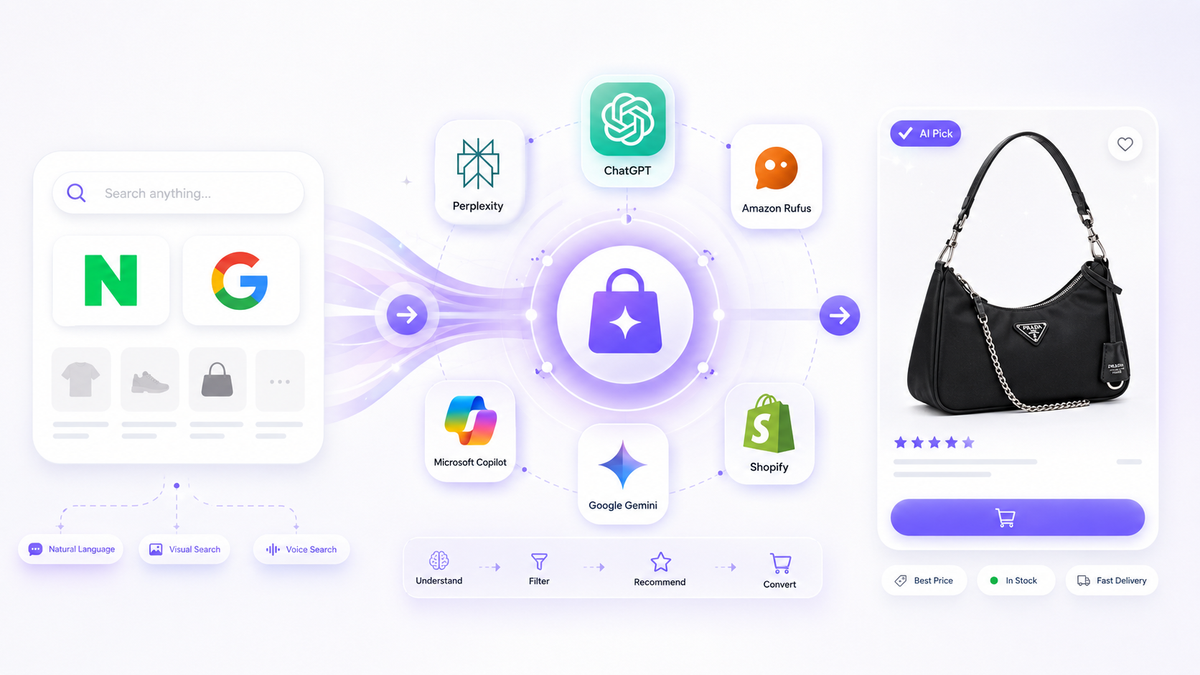
As of 2026, consumer reliance on shopping via Naver and Google search links has plummeted. Instead, users open ChatGPT or Perplexity and ask the AI directly. This isn't just a simple shift in search channels.
It means a powerful filter and agent—the AI—has stepped between consumers and brands.
This isn't a far-off tech story; it's our uncanny reality. Here is a look at the tangible shifts in the AI shopping ecosystem that we must grasp to survive on this massive chessboard.

They Arrive Already 'Pre-Sold'
AI-driven shopping data reveals that traditional e-commerce mechanics are already collapsing. Customers coming via AI display conversion rates completely different from standard traffic.
① Explosive Traffic and Conversion Rates
During the 2025 holiday season, AI-driven traffic to US retail sites surged by a massive 693.4% year-over-year.
② 194% Higher Likelihood to Purchase
Shopping journeys involving Microsoft Copilot were 194% more likely to convert into an actual purchase compared to regular shopping sessions.
③ The 'Pre-Sold' Effect
According to Shopify data, shoppers landing via AI recommendations showed a 38% higher conversion rate than those coming through traditional channels.
The reason is simple
AI has already compared and analyzed hundreds of products on behalf of the user, pointing to that specific brand as the ultimate "solution." By the time consumers land on your site, they are already pre-sold.

Brand Evaluation Logic Across AI Engines
In January 2026, Shopify launched "Agentic Storefronts," enabling brands to distribute their store data across all AI platforms with a single setup.
However, even when fed identical product data, each AI engine recommends different brands. This is because every platform relies on a distinct set of "core criteria" when evaluating products.
Open Protocols Flipping the Scale War
Until now, e-commerce has been a game where giant brands with massive budgets and engineering teams monopolized the top search results. However, starting in late 2025, unified standards known as ACP (Agentic Commerce Protocol) and UCP (Universal Commerce Protocol) were introduced, led by OpenAI and Google.
Now, without complex integration technologies, small brands can expose themselves to AI on the exact same playing field as industry giants. An era has opened where victory is determined not by budget, but by "how well product data is structured."

Can We Get Picked by AI?
If customers enter physical stores looking for brands recommended by AI, the sourcing criteria for retailers and multi-brand buyers must fundamentally transform.
Run a Self-Audit
Open ChatGPT right now and type: "Recommend notable [specific category/price range] brands today." If the brands you carry in-store or plan to source don't appear, they may already be invisible in the AI ecosystem.
The New Sourcing Standard, 'Online Footprint'
A sleek design is no longer enough. To make it onto an AI's recommendation list, a brand must have editorial coverage, authentic Reddit reviews, and clearly structured product specification data. Buyers must treat a brand's "online content volume" as a core KPI for buying decisions.
AI Sessions as 'Traffic Drivers'
93% of AI shopping conversations end within the text response itself without a click-through to a brand's website. Being "mentioned" during this process creates a powerful brand awareness boost, directly driving traffic to the offline and online multi-brand stores that carry those products.