2026 Bag Charm trend
From leather craft to miniature charms — the 2026 bag charm trend, editing identity through singular narratives.
The Birth of the 'Charm' Category, Proven by Numbers
2026: Pinterest searches for 'charm' up 700% in a single year, Google searches for 'bag charm' up 340% year over year, TikTok #Bagdecor videos up 83%.
This speed and scale is not a passing fad. It's the signal that consumer behavior has fully flipped — and a 'category' has officially settled into place.

Rebellion Turned Uniformity: Peak Labubu
It started as a thrill: casually clipping a $15 toy onto a $2,000 luxury bag — the '#Birkinify' trend that swept TikTok in 2024. Pop Mart's 'Labubu' dangling from the bags of BLACKPINK's Lisa and Dua Lipa was the hippest way to break the formula of expensive, buttoned-up luxury.
But in 2026, the picture has flipped 180 degrees. Walk into a café and one in four people has the same furry doll hanging from their bag. The doll attached to be different has, paradoxically, become the most common 'trend item' of all. The moment everyone owns a Labubu, the Labubu loses its meaning as individuality.
So did people strip the charms off their bags? No. Their tastes began evolving to the next stage of charm — more expensive, more refined, carrying more of a 'story that's mine.'

Where the Charm Evolves: Craftsmanship and Narrative
The charm now moves "less cute, more fashionable." As the market floods with charms, brands have begun wielding material and story as their weapons.
Elevation to Objet
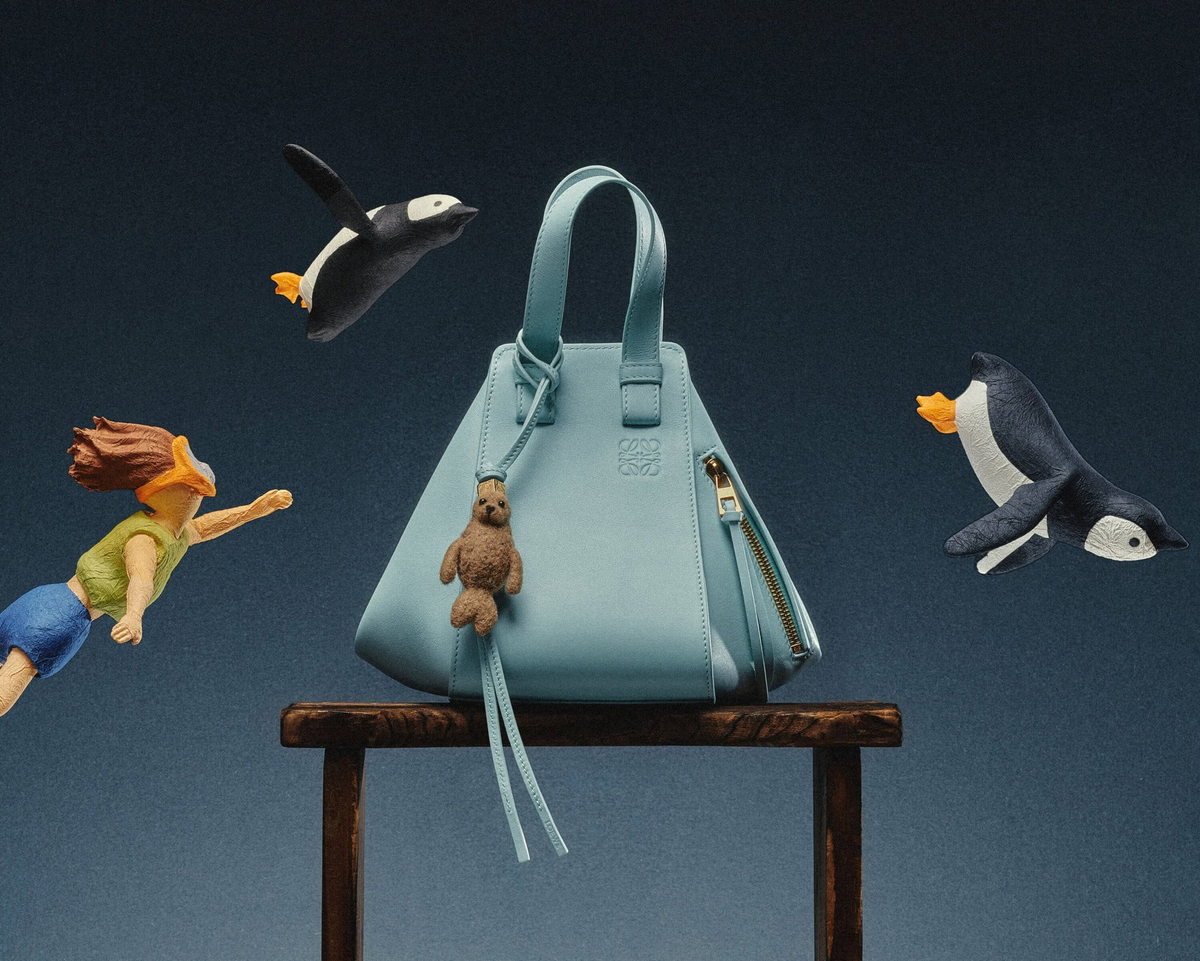
Look at Loewe's intricate leather animal series. Even priced in the hundreds of dollars, the charm has become a powerful craftsmanship objet in its own right. The '70s-style miniature fur stoles spotted on the Chloé runway, and bag charms migrating up long chains to become necklaces on Coach's SS26 runway — all part of the same current.

Hanging a Book on a Bag
Coach's 'Book Charm,' which sold out immediately after its March release this year, is no mere decoration. This $95 miniature book — Jane Austen or Rumi's poetry bound in glove-tanned leather — struck precisely at the psychology of a generation yearning for an 'attention detox' in an era of relentless acceleration. The Asian editions, produced with independent publishers in Korea, China, and Japan, show this is a shared identity statement of a global generation reaching toward physical, offline life.

Edited Identity
Just as 71.2% of Japanese Gen Z answered that "the brand name is not a purchase criterion," this generation isn't satisfied with wholly owning a finished luxury product. They 'edit' — stringing together beads, dolls, and pendants at random into a mood entirely their own, revealing identity through the mix. The spaces with the longest lines at Coachella 2026 were Pinterest's 'charm-making station' and Gap's customizing house — proof that this editorial trend has fully converted into consumer behavior.
Insight for Retailers
The charm is the most powerful tool available for designing in-store experience. From a $20 Pop Mart figure to a luxury house objet in the hundreds of dollars — that wide spectrum represents an enormous business opportunity: covering every tier of buyer within a single category.