The New Grammar of Japanese Menswear 2026
Complete structural beauty in a single garment! Brand strategy and practical insights through AURALEE and COMOLI.
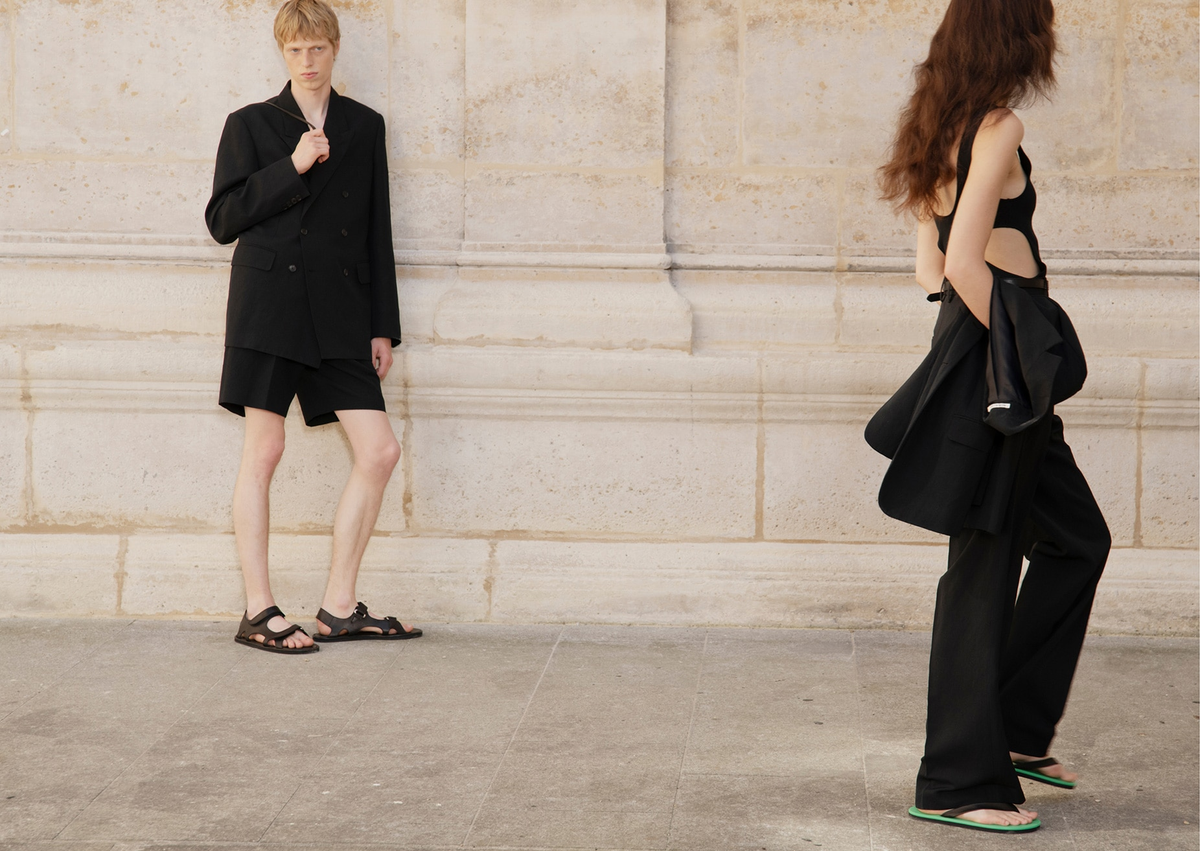
For decades, the highest virtue defining Japanese menswear was 'layering.' A vest over a shirt, a jacket or cardigan meticulously layered over that — flaunting one's 'skill' with color and proportion was Japanese street fashion's native grammar.
But in 2026, on the streets of Tokyo and Osaka, that formula is collapsing. The new keyword local fashion media is watching among men in their 30s and 40s: 'the outfit completed in a single garment.'
Why did they abandon the layering they so loved and begin choosing 'just one piece'? And at the apex of this shift, an analysis of the two giants ruling the market: AURALEE and COMOLI.

The Change Made by 'Climate and Digital'
Behind Japanese men wearing fewer layers lie powerful structural causes.
The Lengthened Summer
The cause local retailers feel most acutely is climate change. With jacket-defying heat now lasting more than six months of the year, layering has become not style but 'physical suffering.' The market has entered survival territory: style must be finished in a single thin linen or khadi shirt.

Layering's Scarcity Revoked
How one layered clothes was once the cipher proving personal fashion literacy and eye. But with layering formulas flooding YouTube and TikTok, stacking garments is no longer a special skill. Power has shifted from the era of flaunting technique to the era of 'what discernment chose this single garment.'

The Haptic Deficit
The phenomenon psychologists call 'haptic deficit' plays its part, too. In an age when fashion is consumed entirely through digital screens, consumers began fixating conversely on the physical textures only offline can offer. The perception spread: investing in the excellence of a single fabric against the skin is far more refined than the visual flourish of stacked layers.

AURALEE — "The Material Speaks First"
The brand standing at the very front of this current is AURALEE, marking its 10th anniversary this year. Grown to annual revenue of ¥3.6 billion and active at Paris Fashion Week alongside Hermès and Louis Vuitton, AURALEE's core strength is uncompromising 'material-first-ism.'
"We spend the most time designing the material. Once the material is decided, color comes, then form follows. In the end, what makes clothing feel good is the fabric." — Designer Ryota Iwai
AURALEE custom-develops 100% of its collection fabrics, leather included. The designer personally tours weaving mills, meeting the people who realize the textures he wants. Kid mohair, semi-sheer wool — garments that deliver an overwhelming tactile experience the moment you touch them. Without dressing up in layers, an AURALEE shirt or cardigan radiates perfect 'structural beauty' entirely on its own.

COMOLI — "The Act of Wearing Is the Proof"
If AURALEE proves itself through material, COMOLI proves itself through the 'air' of the moment you put it on. Founded in 2011 by designer Keijiro Komori, COMOLI has held to the strangest, most obstinate strategy in the fashion scene: 'deliberate non-exposure.'
For fifteen years since its founding, it ignored social media entirely and declined every interview request. Even its lookbooks held more landscape and shadow than clothing. (Even the Instagram account it finally opened in August 2025 — its first in fifteen years — simply drops black-and-white photographs, without a word of display or explanation.)

Yet the reason the world's top select shop buyers scramble to source COMOLI is unmistakable: the brand's philosophy — "the feeling of air between the garment and its wearer."

COMOLI's clothes never restrain the body — their silhouettes flow naturally with movement. The khadi cotton blazers and tropical wool tank tops woven by Italian and Japanese artisans look ordinary to the eye, but the moment they touch the body, they reveal perfect drape. Without ornate motifs or embroidery, the brand aims for 'clothes for every purpose' — garments whose character deepens through years of washing and wearing.

The Practical Guide for Menswear Buying
This shift among Japanese men in their 30s and 40s points retail buyers toward very specific sourcing angles.

Shifting the Buying Budget
Reduce the share of thin, layering-dependent inner pieces (t-shirts, vests) and dramatically increase the share of standalone shirts, cardigans, and light blazers — pieces whose silhouettes hold their form and presence worn on their own.
Texture-Centered Sourcing
Products whose grain is visible to the eye and whose texture registers instantly to the touch — linen, silk blends — belong at the front of the store. This is the era when 'tactile value' that breaks through the screen decides the sell-through rate.
Simplifying VMD and Editorial
Elaborate styling proposals explaining "how to match this" lose their force in store displays and online content. Lowering the consumer's communication fatigue with one intuitive message — "this one piece is enough" — is 2026 retail's most refined grammar.