Jellycat: The Comfort Plush for Grown-Ups
Revenue up sixfold in three years — Jellycat's feelconomy strategy, aimed straight at adults' emotions.
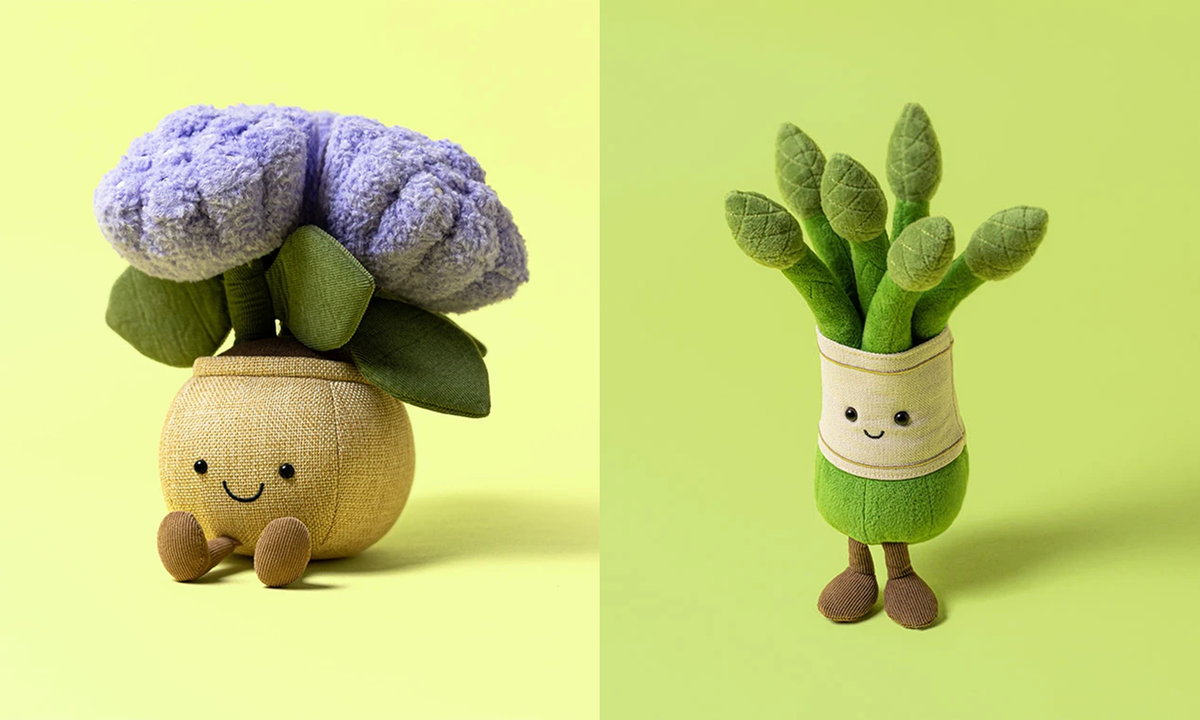
A brand whose revenue exploded sixfold in three years. Sweeping up roughly $450 million in 2024 sales, and at one point overtaking LEGO — the global king of toys — in UK search volume.
Jellycat, the comfort plush brand from London.

But the ones behind these enormous numbers today aren't children. The people lining up for hours at pop-up stores to buy these plushes — avocados, espresso cups, croissants with smiling faces drawn on — are adults: Gen Z and millennials. Here's a dissection of the business structure of Jellycat, evolved beyond a simple toy into a 'lifestyle status.'

Feelconomy
The core keyword running through Jellycat's explosive growth is the 'feelconomy' — emotional consumption.
NYU marketing professor Jared Watson defined the phenomenon as "the MZ generation's mental health code." Amid a grinding reality, these plushes have become an emotional stabilizer for adults who say, "holding this makes me feel calm and safe."

The Evolution into a Fashion Accessory
This is why fashion buyers should now read Jellycat not as a 'toy,' but as a 'lifestyle accessory.'
The mini plushes of the Amuseables line are Gen Z's perfect 'status symbol' right now. Clipping a $23 croissant bag charm onto a luxury bag begins from exactly the same psychology as attaching Loewe's leather squid charm or Coach's book charm: 'giving my bag a cool narrative.'
An era when an adorably trivial plush hangs from a bag and becomes the subject of Hypebeast and Vogue fashion editorials. Jellycat has positioned itself as the one and only toy brand capable of competing with high-end bag charms.

'Consumption You Look At' vs. 'Consumption You Hold'
Compare Jellycat with China's Pop Mart (Labubu) — the two great peaks of today's kidult market — and this brand's originality comes into sharper focus.
If Pop Mart is the consumption of 'the visual and ownership' — tearing open blind boxes and displaying them — Jellycat is the consumption of 'the tactile and comfort,' resting on an overwhelmingly soft touch. They may look like competitors, but Jellycat is building a fully independent ecosystem through 'the differentiation of comfort and touch' — something Pop Mart cannot offer.

Deliberate Scarcity and Social Virality
Jellycat doesn't just sell things. It turns acquiring them into a kind of 'hunt.'
It engineers sellouts deliberately, and stages perfectly set 'immersive experiences' in each city — the patisserie in Paris, the diner pop-up in New York, where staff package and serve each plush as if cooking it. The videos rack up millions of TikTok views and generate massive FOMO. Last year's Seoul Space collection was likewise part of this extreme 'deliberate scarcity' strategy — sold exclusively in Seoul, nowhere else.

Fashion Industry Notes (The Insight)
The 'bag charm' category carries low unit prices and excellent customer accessibility — yet the moment one hangs from a bag, it produces explosive editorial imagery in store displays and on social media. It's the perfect cross-selling item, adding wit beside heavier apparel and bag lineups.
One variable: this year, Jellycat fully restructured its UK sales agent network into an in-house sales force. With the wholesale structure tightening, the key strategy will be working backward from the December holiday season — when Google searches peak — and securing order volume preemptively.

Brand Storytelling
Where Jelly Meets Cat
The name Jellycat was coined in 1999 from the two favorite words of the founding brothers' sons: 'jelly' and 'cat.' Ironically, the brand's signature isn't a cat at all — it's the 'Bunny.'
The War on Knockoffs
When Aldi released a copycat of Jellycat's bestseller 'Dexter the Dragon,' Jellycat took immediate legal action. A famous episode showing just how sharply this soft, squishy-looking brand fights when it comes to business and intellectual property.