Selling Eyewear Like Timepieces: Inside JMM
The Growth Formula of Jacques Marie Mage: Shaking Up the Global Eyewear Market
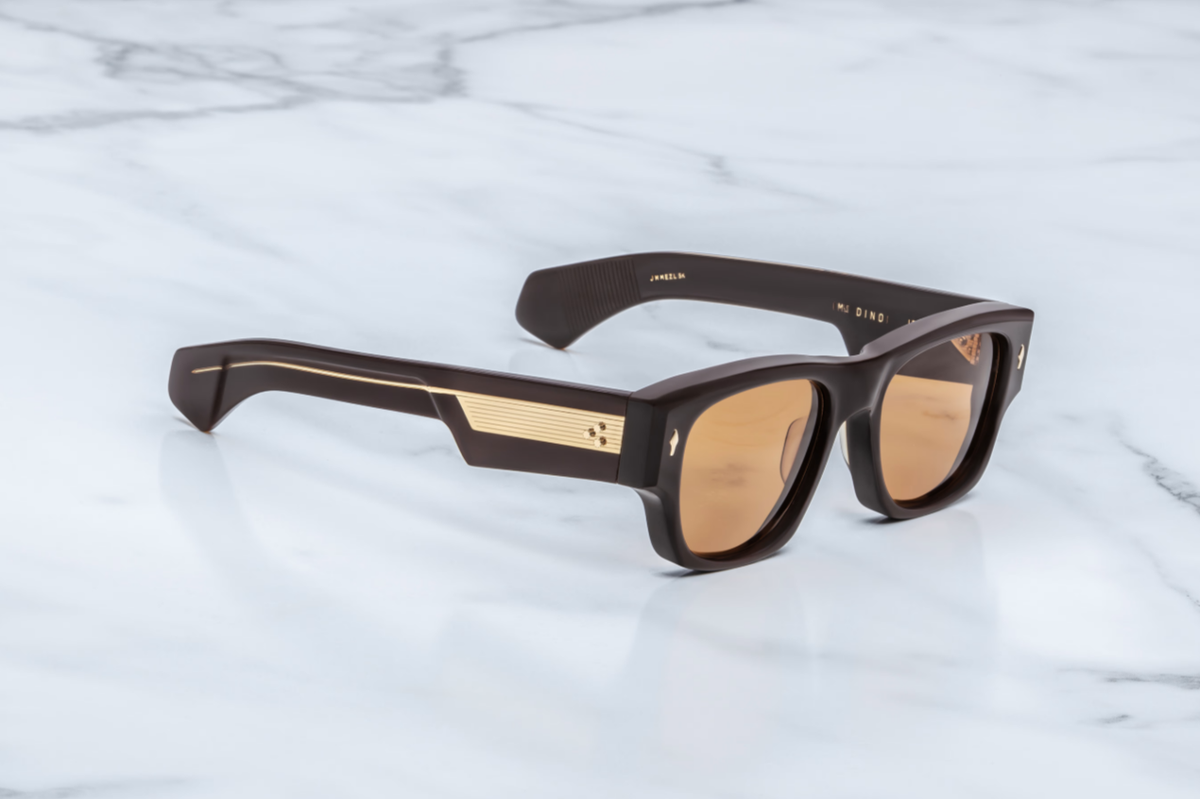
Every Jacques Marie Mage (JMM) frame bears an engraved edition number. Production is strictly capped at just 400 to 800 pieces per colorway; once sold out, production for that specific colorway terminates permanently. Price points range from $600 to upwards of $1,500.
Rather than operating as a conventional eyewear manufacturer, JMM functions more like a brand dropping rare sneakers or dealing limited-edition timepieces—and the collector market responds accordingly.

Without traditional marketing or grand branding initiatives, selling strictly "if you know, you know" through a handful of selective channels generated annual sales exceeding approximately $41 million—a figure comparable to Phoebe Philo’s post-return report card.
The Lyst Index cited JMM’s rise (+34% in demand) as evidence of "growing appetite for accessories that go beyond branding to deliver narrative and craftsmanship." Here is a dissection of the success formula behind the hottest independent brand shaking up the eyewear market.

The DITA Heritage and the Grammar of Collecting
Founder Jérôme Mage built his career at L.A. Eyeworks—known for Hollywood-style storytelling—and DITA, which established the precedent of Japanese production in Fukui.

When JMM launched in 2014, the market was dominated by lightweight, thin minimalist frames. Mage took a direct gamble with thick, sculptural acetate frames—a bold stance that, a decade later, has become the brand's unmistakable signature.

Crucially, while JMM utilizes the same Fukui workshops as DITA, it elevated its eyewear beyond "good glasses" to the status of a collectible asset. The secret lies in two distinct approaches:
- Numbering: Engraving every frame with a limited edition number visualizes scarcity.
- Iconic Naming: Assigning cultural icons to every silhouette—such as 'Dealan' (inspired by Bob Dylan’s 60s London tour) or 'Fellini' (named after director Federico Fellini)—infuses storytelling directly into the frame.
Replacing prominent logos with edition numbers, cultural narratives, and top-tier material specifications—such as heavy Japanese acetate and beta-titanium—fully justifies the $1,000 price tag.

"No Indiscriminate Distribution"
The third collaboration with Jeff Goldblum originated when Mage discovered that Goldblum was already a genuine fan wearing JMM. Similar organic connections drove partnerships with Succession's Jeremy Strong and Patti Smith. JMM does not seed product indiscriminately across award-show red carpets; it aligns exclusively with figures who already love the brand and possess distinct individuality.

The retail strategy follows the same ethos. JMM refers to its physical locations as "galleries," exhibiting retired archive pieces alongside exclusive artwork. Over the past 18 months, following openings in Milan, London, and Paris, the brand launched its first Asian flagship in Omotesando, Tokyo, with a New York SoHo store scheduled next. A young house celebrating its 10th anniversary is already leveraging its "archive" as a core asset in retail environments.

The Parallel with High Watchmaking
The eyewear market is bifurcated into two primary poles: the "licensed logo empires" led by conglomerates like EssilorLuxottica or Kering, and the "independent craft camp" competing purely on product quality. Consumers fatigued by mass-produced logo goods are steadily shifting toward the latter, with JMM standing as the undisputed leader of this movement.
This trajectory runs parallel to the high-end watch industry. As premiums on current production models from houses like Patek Philippe soften, independent watchmakers such as F.P. Journe command extraordinary premiums. As smart eyewear expands into a $30 billion market, the perceived value of "a limited batch of 400 pieces hand-sculpted by Japanese artisans" paradoxically reaches its peak.

Strategic Takeaways
- The Allocation System of WatchmakingJMM does not accept bulk wholesale orders like standard fashion brands. Emulating Rolex or Patek Philippe, which allocate inventory strictly to verified dealers, JMM grants product access only to an elite circle of global retail partners. Stockists are audited for eligibility to represent the brand rather than merely purchasing inventory.
- A Litmus Test for Store TieringThis dynamic flips the balance of power between retailer and brand. For luxury consumers, being an authorized JMM stockist serves as an immediate badge proving a select shop’s high curation, financial backing, and cultural capital.
- An Asset Strategy Disguised as EyewearDue to the strict rule that no model is ever reproduced once the 400-piece run is complete, coveted models trade at significant premiums above retail on secondary markets. Eyewear is transformed from a consumable good into a value-retaining asset—the most formidable narrative JMM has constructed.

Editorial Small Talk
New Editions, Not New Designs
The 'Dealan' and 'Molino' frames from JMM's 2015 debut collection remain the brand's primary flagships. For ten years, the brand has maintained the identical silhouette design while releasing limited runs purely through altered colorways. Bypassing the pressure to invent entirely new shapes every season, JMM focuses on varying a perfected silhouette through color to trigger collector desire—a strategy borrowed directly from high watchmaking giants like Rolex or Audemars Piguet. Applying the playbook of timepieces to eyewear is precisely how JMM established itself as an American luxury house in just a decade.