How Sandy Liang Built Her Brand Fandom
The success formula of a brand that has captured both an original aesthetic and mass scalability.

In fashion, the most common way for a brand to spread awareness is to run ads backed by big capital. But Sandy Liang, the New York-based designer brand leading the "Girlhood" aesthetic, chose an entirely different path: a strategy that uses "collaboration" itself as a marketing channel, instead of ad spend or massive campaigns.
Sandy Liang's collaboration strategy isn't a commercial event that simply borrows a big brand's name. Starting from the designer's own story and genuine taste, it shows the most efficient expansion model for widening the brand's world into categories with different customer bases.
From "Personal Taste" on the Runway to an Official Collaboration
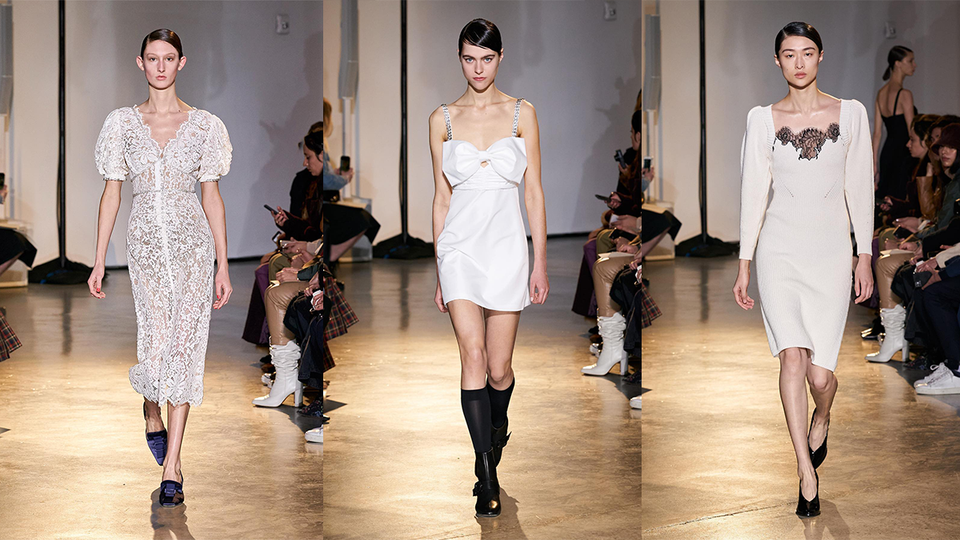
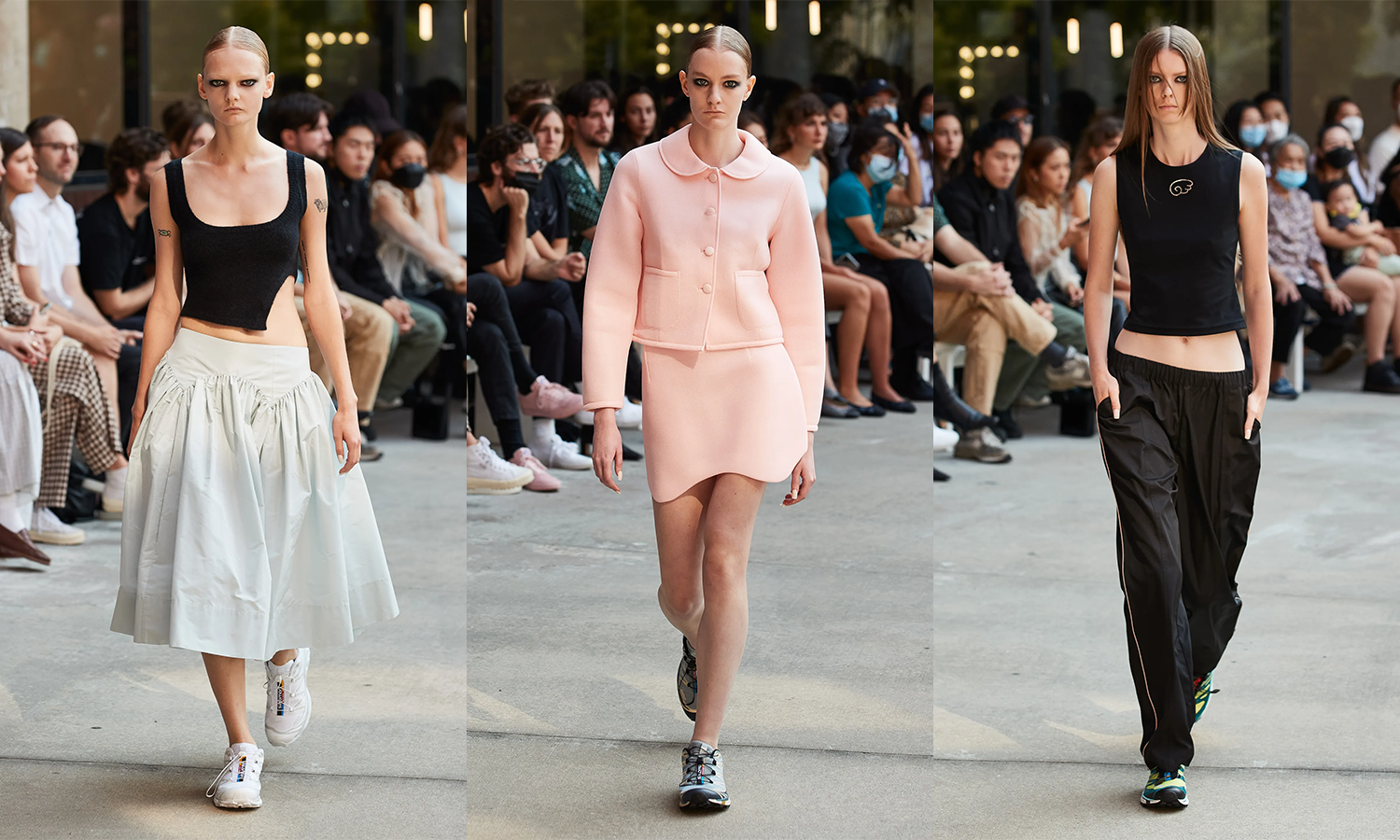
The starting point of Sandy Liang's collaboration map was her Spring 2022 ready-to-wear (RTW) show. At the time, models walked the runway in Sandy Liang's signature dresses paired with Salomon's "XT-6" and "RX Snow-Moc" sneakers.
This wasn't an official contract or sponsorship between the brands. Sandy Liang regularly wore Salomon sneakers and loved the styling of pairing her romantic clothing with technical gorpcore footwear, so she put them on the runway herself.
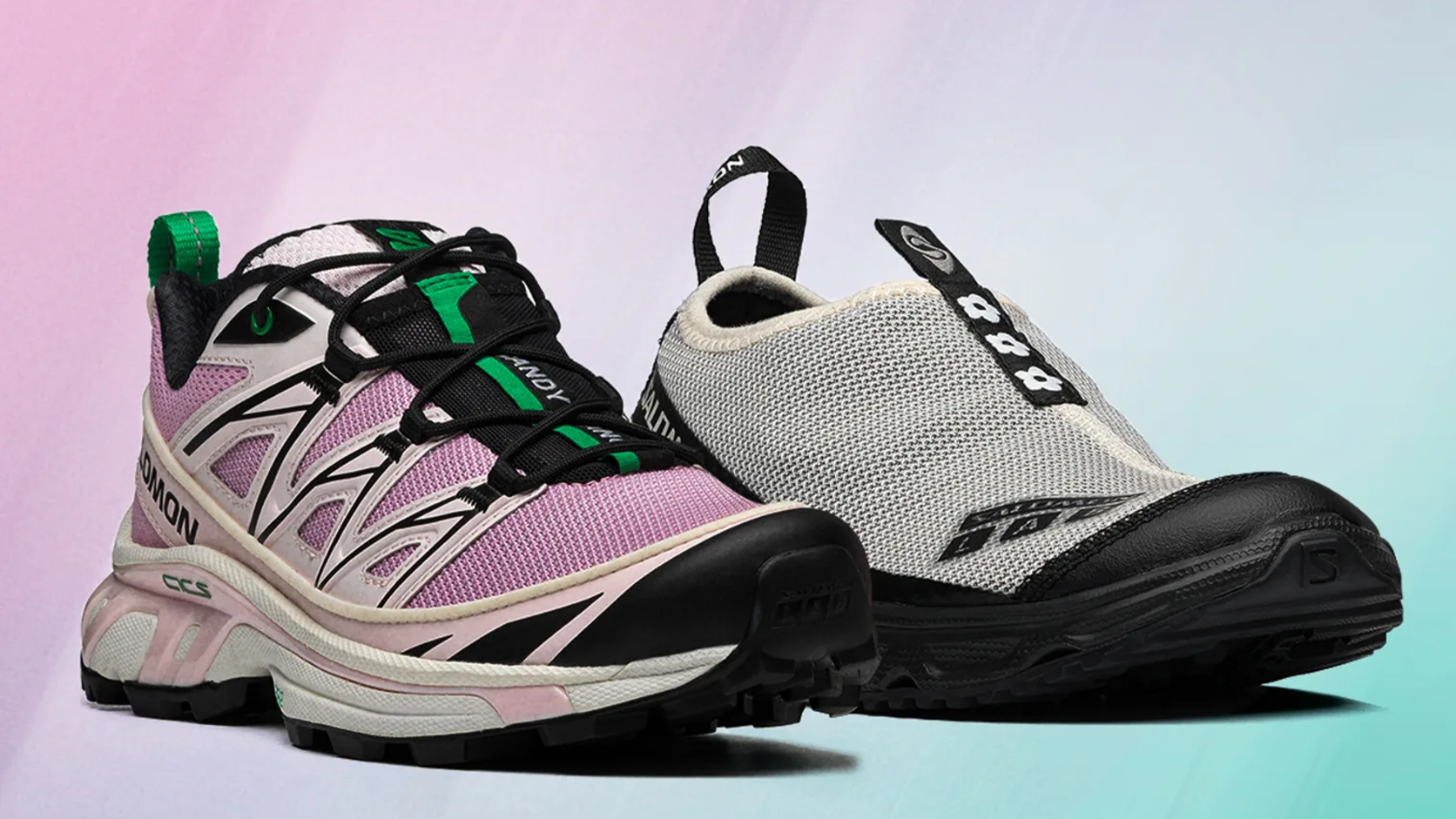
The industry and Salomon's headquarters responded immediately. A year later, in April 2023, "Sandy Liang × Salomon XT-6 Expanse (Bubblegum Pink)," the first-ever women's partnership in Salomon Sportstyle's history, was officially released.
Even before it was officially confirmed, lines formed outside the New York store, and in China, it shook up the sneaker scene to the point where people mobilized dozens of others to secure raffle codes and still failed to win. Adding Sandy Liang's signature feminine sensibility to technical functionality, the collaboration was praised as "one of the best collaborations of 2023," rapidly expanding her global fan base.

Sandy Liang's Collaborations
After that successful first step with Salomon, Sandy Liang went on to present a string of collaborations with brands in entirely different categories, widening her touchpoints.
Salomon (2023–2026)
Following the first success, in July 2024, at the peak of the ballet sneaker trend, she introduced the "Speedcross 3 Ribbon" with ribbon details, and the partnership continued into a third chapter in July 2026. Through this, Sandy Liang firmly established the brand's presence in the gorpcore, streetwear, and performance footwear communities.
Cou Cou (August 2026)
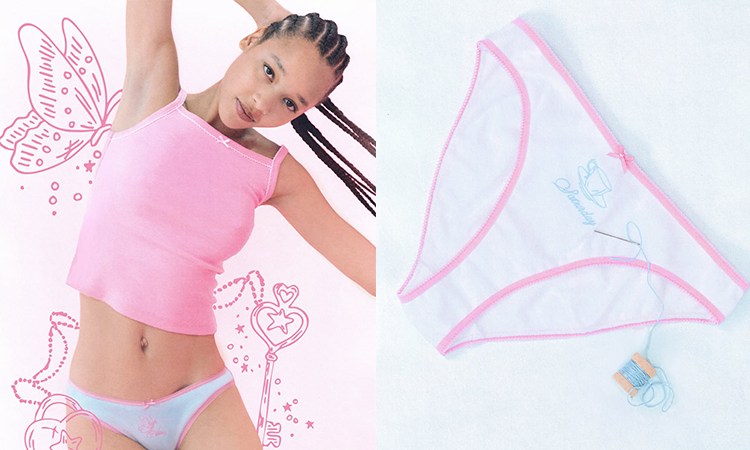
She took part as the first brand collaboration partner of eco-friendly underwear brand Cou Cou. Organic cotton pajamas, lace trims, and days-of-the-week underwear carried narratives inspired by books she read as a child (The Secret Garden, Kiki's Delivery Service, The Little Prince). It fully absorbed an independent DTC community that shares the girlhood aesthetic.
Gap (October 2025)
She pivoted completely from sporty to mass-market Americana. She released women's and kids' apparel combining her own story of growing up in New York's Chinatown with Gap's timeless denim heritage. It was a moment that expanded the name of Sandy Liang, an independent designer, to the general public and the kids' market all at once.
Sandy Liang's Collaboration Principles
① Authenticity First, Collaboration Second
What the three partnerships have in common is not "let's collaborate because it fits," but that "brands already woven into the designer's life and taste became official." Salomon was the shoe the designer already wore, Gap was the clothing that made up her childhood growing up in New York, and Cou Cou was a brand that already shared the same customer base.
② Category Expansion with Non-Overlapping Target Customers
Salomon (sports and performance), Gap (mass market and kids), and Cou Cou (intimates and lifestyle) have completely different price ranges and core buyers. Even if Salomon customers don't buy Cou Cou, it created a structure in which new customers who come in through Cou Cou discover Salomon. Each collaboration worked as an independent marketing channel, driving an organic inflow of new customers.

💡 Fashion Business Insights
Brands: Look for the connection between brands before collaborating: Relationships where one brand already uses the other naturally, like Sandy Liang and Salomon, where there are personal memories, like Gap, or where an aesthetic is shared, like Cou Cou, make it easy to explain the backstory of a collaboration. Beyond a partner's name recognition, it's important to first find a point of connection that helps consumers understand "why these two brands came together."
Marketers: Design new customer touchpoints with each collaboration: Rather than repeatedly collaborating with similar brands within the same category, choosing different areas such as sports, mass casual, and intimates can increase opportunities to introduce the brand to new customers. That said, even as partners change, it's important to keep the brand's own design language intact.
Buyers: Look at the brand's expansion that follows, not just the collaboration products: Beyond the buzz of a collaboration itself, it's worth looking at which categories and customer groups the brand is moving toward through it. For independent brands in particular, the direction of repeat collaboration partners can serve as a reference signal for reading future product expansion and brand positioning.
💡 EDITORIAL SMALL TALK & INSIGHTS
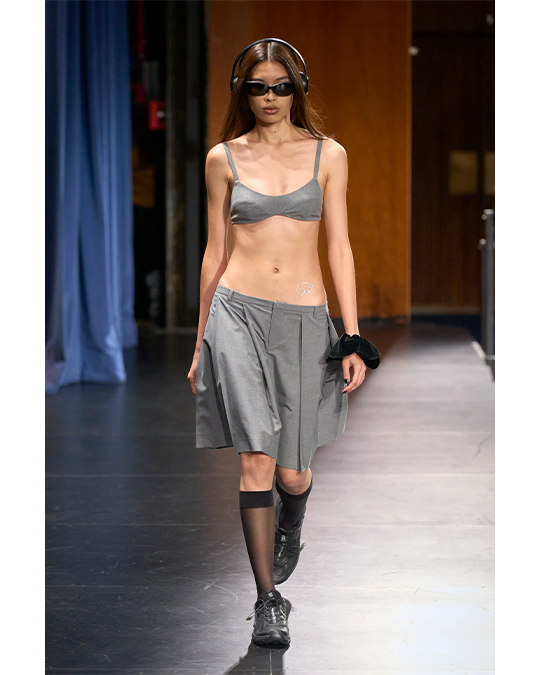
Runway Styling That Broke Fashion Convention
Sandy Liang, as both founder and fan, putting another brand's (Salomon's) products on her runway before any official collaboration contract and generating organic buzz is a highly unusual and successful case of designer-led collaboration in which "fandom drove the collaboration."