Houdini, the Sustainable Brand Gap Chose
An analysis of how the 20-year signature 'Power Houdi' seized the scene — plus a core buying guide.
The most fascinating thing about Swedish outdoor brand Houdini lies in its 'paradox.'
By annual revenue, it's a small independent brand — thousandths the size of American retail giants Gap or Target — yet it's named alongside them as a key material partner. And though a rigorous performance outdoor brand, fashion consumers voluntarily classify it as 'gorpcore' and trade it at a premium.
Beyond consuming sustainability as marketing, Houdini has made it an absolute principle of technology and operations — and entered the high-end fashion channel on that basis. Here's an analysis of the brand's strategy and buying insights.

The Small Brand Standing Beside Gap
In June 2025, a partnership caught the fashion world's eye. Named as strategic launch partners for Syre — the Swedish textile-recycling startup H&M invested in — were Gap, Target, and Houdini.

Walking Alongside the Mega Retailers
Gap and Target took on the massive 'demand guarantee,' committing to purchase over 10,000 tons of circular polyester annually. Houdini, meanwhile, took its seat at this enormous table armed not with scale, but with 'authenticity' and 'a deep understanding of material innovation.'
Technology, Not Marketing
Over the next three years, Houdini will convert 50% of its polyester use to circular materials — proof, in the capital markets, that sustainability isn't a slogan but the business model forming the brand's skeleton.

The Gorpcore Icon Consumers Made
In an era when Zara reads a trend and pours out new product within two weeks, Houdini declared 'delayed gratification' through its January 2026 journal. The embodiment of that philosophy is the 'Power Houdi' — the signature item whose design hasn't changed in over twenty years.

The Fashion Scene's Voluntary Adoption
The Power Houdi was born as a technical fleece for mountain guides — yet on resale platforms like eBay, it circulates as a fashion item, tagged 'gorpcore technical fleece.'

Leadership That Chose 'the Planet' Over 'Growth'
In July 2025, Eva Karlsson — the brand's leader for more than twenty years — stepped down as CEO and shifted into the role of CCO (Chief Creative Officer).
Directly Commanding the Circular Economy
Rather than recruiting an outside creative director, this was a radical decision: the founder devoting herself directly to creative and circular innovation.
The Planetary Boundaries Checklist
Created with earth systems scientist Johan Rockström, this checklist is the first principle of the design process. If a design can't pass the questions — "What about carbon? What about biodiversity?" — it doesn't even begin.

The Core Lineup Structure Buyers Should Know
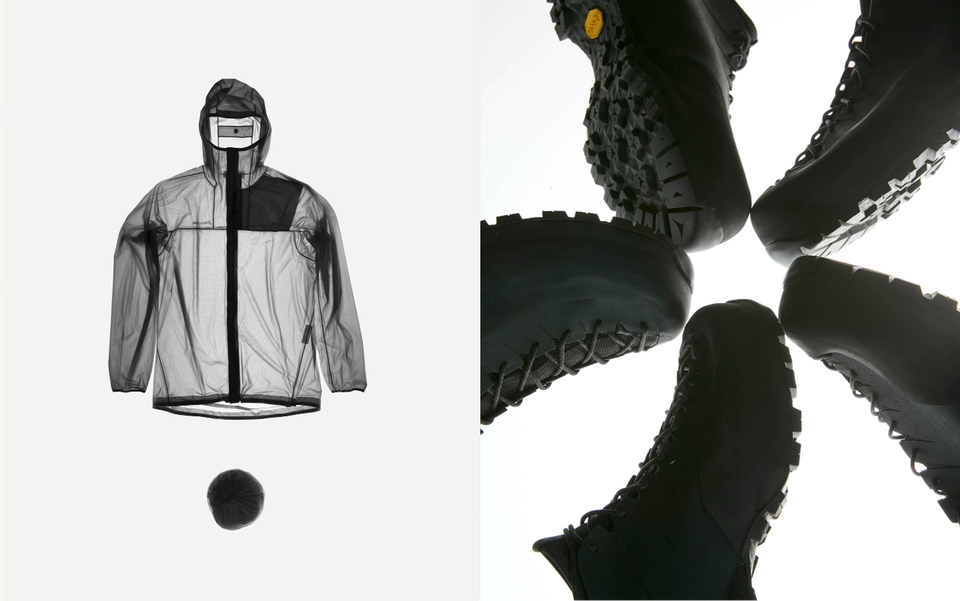
The product groups to secure when building a buying list are clear. The signature 'Power Houdi' — its design intact for twenty years, now the cheat code for entering the fashion scene — and its lightweight SS-season version, the 'Power Up Light Houdi,' anchor the brand's center.

If those are the heroes leading the brand today, the new FW25 3D-seamless line 'Lykan' and the 'Airweb™ knit' launched in early 2026 symbolize the next generation's technology: zero waste, with no fabric offcuts at all. Round it out with the 'Go Jacket,' moving fluidly between city and outdoors, or 'The Cloud,' a lightweight midlayer — and you have a complete selection of minimal Scandinavian sensibility.

[Reference] Brand Storytelling
It Started as Climbers' DIY
Houdini's first product was a stretch fleece the founder and her friends made themselves, to solve the problem of failed temperature regulation mid-climb. The brand's present form — key partner to giant corporations — began, in the end, with an obsession with perfect function.
The Inimitable 23-Step Process
The Polartec® fabric used in the Power Houdi is produced in Italy through a full 23-step process. Houdini discloses its supply chain transparently, calling this complex process itself the core competitive advantage that makes imitation impossible.